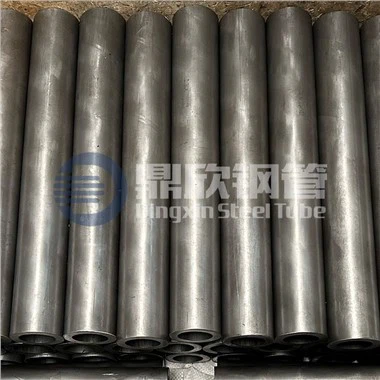
Can E235 +N be used in water treatment?
As a supplier of E235 +N, I often get asked about the suitability of this material for various applications, and water treatment is one area that frequently comes up. In this blog post, I'll delve into the properties of E235 +N and explore whether it can be effectively used in water treatment processes.
Understanding E235 +N
E235 +N is a type of structural steel that is commonly used in a wide range of engineering applications. The "E" in the designation stands for European standard, while "235" indicates the minimum yield strength of the steel in megapascals (MPa). The "+N" suffix denotes that the steel has been normalized, which is a heat treatment process that improves its mechanical properties and uniformity.
One of the key advantages of E235 +N is its relatively high strength-to-weight ratio, which makes it suitable for applications where structural integrity is important. It also has good weldability and formability, allowing it to be easily fabricated into various shapes and sizes. Additionally, E235 +N is readily available in the market, making it a cost-effective choice for many projects.
Water Treatment Requirements
Before determining whether E235 +N can be used in water treatment, it's important to understand the specific requirements of the water treatment process. Water treatment typically involves a series of steps to remove contaminants and impurities from water, such as filtration, sedimentation, disinfection, and chemical treatment. The materials used in water treatment systems must be able to withstand the corrosive effects of water and the chemicals used in the treatment process, as well as maintain their structural integrity over time.
Corrosion Resistance
One of the main concerns when using E235 +N in water treatment is its corrosion resistance. Water, especially if it contains dissolved oxygen, salts, or other corrosive substances, can cause the steel to rust and corrode over time. Corrosion not only weakens the structural integrity of the steel but can also introduce contaminants into the water, which can have a negative impact on the quality of the treated water.
To assess the corrosion resistance of E235 +N in water treatment applications, it's important to consider the specific conditions of the water, such as its pH, temperature, and chemical composition. In general, E235 +N has a moderate level of corrosion resistance, but it may require additional protection in harsh or corrosive environments. This can be achieved through the use of protective coatings, such as paint, epoxy, or galvanizing, which can act as a barrier between the steel and the water, preventing corrosion from occurring.
Compatibility with Water Treatment Chemicals
In addition to corrosion resistance, E235 +N must also be compatible with the chemicals used in the water treatment process. Many water treatment chemicals, such as chlorine, acids, and alkalis, can react with the steel and cause corrosion or other forms of damage. Therefore, it's important to ensure that the steel is resistant to the specific chemicals used in the treatment process and that any protective coatings or linings are also compatible with these chemicals.
Before using E235 +N in a water treatment system, it's advisable to conduct a compatibility test to determine the suitability of the steel and any protective coatings for the specific chemicals and conditions of the water treatment process. This can help to prevent costly damage to the system and ensure the long-term performance and reliability of the water treatment equipment.
Applications in Water Treatment
Despite the potential challenges related to corrosion and chemical compatibility, E235 +N can still be used in certain water treatment applications. For example, it can be used in the construction of structural components, such as frames, supports, and platforms, for water treatment plants. These components are typically not in direct contact with the water or the treatment chemicals and can therefore benefit from the high strength and good weldability of E235 +N.
E235 +N can also be used in the fabrication of certain types of water treatment equipment, such as tanks, pipes, and fittings, provided that appropriate corrosion protection measures are taken. For example, if the equipment is to be used in a relatively mild water environment, a simple paint coating may be sufficient to protect the steel from corrosion. In more harsh or corrosive environments, more advanced protective coatings or linings, such as epoxy or rubber, may be required.
Other Considerations
In addition to corrosion resistance and chemical compatibility, there are other factors to consider when using E235 +N in water treatment applications. For example, the steel must be able to withstand the mechanical stresses and loads associated with the water treatment process, such as pressure, flow, and vibration. It must also be easy to clean and maintain to prevent the accumulation of contaminants and bacteria, which can affect the quality of the treated water.
Furthermore, it's important to ensure that the use of E235 +N in water treatment systems complies with relevant industry standards and regulations. This may include standards for material quality, fabrication, installation, and operation, as well as regulations related to water quality and environmental protection.
Conclusion
In conclusion, E235 +N can be used in water treatment applications, but it requires careful consideration of its corrosion resistance, chemical compatibility, and other factors. While it has some advantages, such as high strength and good weldability, it may need additional protection in harsh or corrosive environments. By taking appropriate measures to protect the steel from corrosion and ensuring its compatibility with the water treatment chemicals, E235 +N can be a viable option for certain water treatment applications.
If you're considering using E235 +N in your water treatment project, I encourage you to consult with a qualified engineer or water treatment specialist to determine the most suitable material and corrosion protection measures for your specific needs. As a supplier of E235 +N, I'm also available to provide you with more information about the material and its applications in water treatment. You can find more information about our other steel products, such as EN10083 - 3 34Crmo4 42Crmo4 +C +QT Steel Tube for Automotive Part, DIN 2391 ST35 ST45 ST52 BK BKW BKS GBK NBK Precision Seamless Tube, and Motorcycle Front Fork Tube SAE 1536 1541 on our website.
If you have any questions or would like to discuss your specific requirements for E235 +N or other steel products, please feel free to reach out. I'm here to help you make the best choice for your water treatment project and look forward to the opportunity to work with you on your procurement needs.


References
- BS EN 10025 - 2:2004, Hot - rolled products of structural steels - Part 2: Technical delivery conditions for non - alloy structural steels.
- ASTM A36/A36M - 19, Standard Specification for Carbon Structural Steel.
- Water Treatment Handbook, various editions, covering general principles of water treatment and material selection.