EN 10083-3 is a crucial standard in the steel industry, especially for those of us who are suppliers. It plays a pivotal role in ensuring the homogeneity of steel composition, which is essential for the quality and performance of steel products. In this blog, as an EN 10083-3 supplier, I will delve into how this standard achieves the goal of maintaining a uniform steel composition.
The Significance of Homogeneous Steel Composition
Before we explore how EN 10083-3 ensures homogeneity, it's important to understand why it matters. Homogeneous steel composition is vital for several reasons. Firstly, it directly affects the mechanical properties of steel. A consistent composition throughout the steel product ensures that it has predictable strength, hardness, and ductility. This predictability is crucial for applications where safety and reliability are paramount, such as in the automotive and construction industries.
Secondly, homogeneous composition enhances the corrosion resistance of steel. When the composition is uniform, there are no weak points in the steel structure where corrosion can initiate and spread more rapidly. This is particularly important for steel products that are exposed to harsh environments, like marine structures or chemical processing equipment.
EN 10083-3: An Overview
EN 10083-3 is part of the European standard series for quenched and tempered steels. It specifies the technical delivery conditions for alloy steels in the form of bars, sections, and rods. The standard covers a wide range of steel grades, each with specific chemical and mechanical requirements.
One of the key aspects of EN 10083-3 is its focus on controlling the chemical composition of steel. By setting strict limits on the amounts of various elements, the standard ensures that the steel produced meets the desired quality and performance criteria.
Chemical Composition Control
EN 10083-3 defines precise limits for the chemical elements present in the steel. These elements include carbon (C), silicon (Si), manganese (Mn), phosphorus (P), sulfur (S), chromium (Cr), nickel (Ni), and others. Each element has a specific role in determining the properties of the steel.
Carbon is one of the most important elements in steel. It significantly affects the strength and hardness of the material. EN 10083-3 sets narrow ranges for carbon content to ensure that the steel has the desired mechanical properties. For example, in some steel grades, the carbon content may be limited to a range of 0.35% - 0.45%. This precise control helps to maintain the consistency of the steel's strength and hardness across different batches and products.
Silicon is another element that is carefully regulated. It improves the strength and hardness of steel while also enhancing its resistance to oxidation. By controlling the silicon content within the specified limits, EN 10083-3 ensures that the steel has the appropriate balance of these properties.
Manganese is added to steel to improve its hardenability and toughness. EN 10083-3 sets limits on manganese content to ensure that the steel has the desired combination of these properties. Phosphorus and sulfur are considered impurities in steel, and their levels are strictly limited to prevent brittleness and reduce the risk of cracking during processing.
Sampling and Testing
To ensure that the steel composition meets the requirements of EN 10083-3, rigorous sampling and testing procedures are in place. Samples are taken from different parts of the steel product, including the surface, middle, and core, to ensure that the composition is uniform throughout.
These samples are then analyzed using advanced analytical techniques, such as spectroscopy and chemical analysis. Spectroscopy can accurately determine the elemental composition of the steel by measuring the wavelengths of light emitted or absorbed by the atoms in the sample. Chemical analysis involves dissolving the sample in a suitable solvent and then using various chemical reactions to determine the amounts of different elements.
The test results are compared against the specified limits in EN 10083-3. If the composition of the steel does not meet the requirements, the product is either rejected or undergoes further processing to correct the composition.
Heat Treatment and Homogenization
Heat treatment is an important step in ensuring the homogeneity of steel composition. EN 10083-3 provides guidelines for the heat treatment processes, such as quenching and tempering. Quenching involves rapidly cooling the steel from a high temperature to harden it, while tempering is a subsequent heat treatment that reduces the brittleness and improves the toughness of the steel.
During heat treatment, the atoms in the steel have the opportunity to diffuse and redistribute themselves, which helps to achieve a more uniform composition. The standard specifies the heating rates, holding times, and cooling rates for each heat treatment process to ensure that the steel is treated consistently and that the composition remains homogeneous.
Quality Control and Traceability
As an EN 10083-3 supplier, we implement strict quality control measures to ensure that our products meet the standard's requirements. We maintain detailed records of the production process, including the raw materials used, the manufacturing steps, and the test results. This traceability allows us to track the origin of the steel and ensure that it has been produced in accordance with the standard.
In addition, we regularly conduct internal audits and participate in external inspections to verify our compliance with EN 10083-3. This commitment to quality control helps us to provide our customers with high-quality steel products that have a homogeneous composition.
Applications of EN 10083-3 Steel
The steel products that comply with EN 10083-3 are used in a wide range of applications. In the automotive industry, they are used for manufacturing components such as gears, shafts, and axles, where high strength and toughness are required. The homogeneous composition of the steel ensures that these components have consistent performance and reliability.


In the construction industry, EN 10083-3 steel is used for structural elements, such as beams and columns. The uniform composition of the steel helps to ensure the stability and safety of the structures.
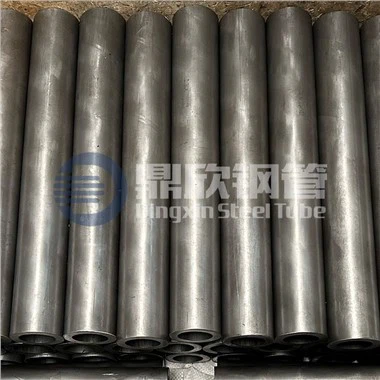
We offer a variety of steel products that meet the EN 10083-3 standard, including DIN 17200 C22/Ck22 C25/Ck25 C30/Ck30 C35/Ck35 C45/Ck45 C55/Ck55 Seamless Tube, Cold Drawn Seamless Tube 20Cr 40Cr, and Alloy Steel Seamless Tube 20Mn2 40Mn2. These products are known for their high quality and homogeneous composition, making them suitable for a wide range of applications.
Conclusion
EN 10083-3 is a comprehensive standard that plays a crucial role in ensuring the homogeneity of steel composition. Through strict control of chemical composition, rigorous sampling and testing, proper heat treatment, and effective quality control, the standard helps to produce steel products with consistent and predictable properties.
As an EN 10083-3 supplier, we are committed to providing our customers with high-quality steel products that meet the standard's requirements. If you are in need of steel products with a homogeneous composition for your specific application, we invite you to contact us for procurement and further discussion. We look forward to working with you to meet your steel needs.
References
- EN 10083-3:2006, Quenched and tempered steels. Technical delivery conditions for alloy steels for quenching and tempering.
- "The Science of Steel" by George Krauss.
- "Steel Metallurgy for the Non-Metallurgist" by John D. Verhoeven.