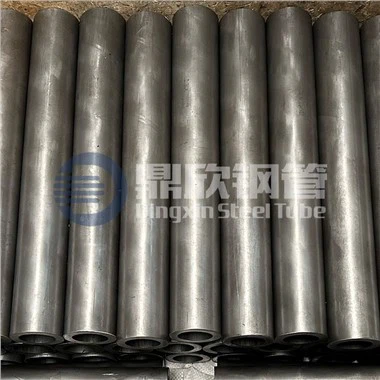
Hey there! As a supplier of 4130 tubing, I often get asked about how its price stacks up against other types of tubing. So, I thought I'd take a deep dive into this topic and share some insights with you all.
First off, let's talk a bit about 4130 tubing. 4130 is a low-alloy steel that contains chromium and molybdenum. This gives it some pretty awesome properties, like high strength, good toughness, and excellent weldability. It's commonly used in a wide range of applications, from automotive and aerospace to machinery and construction.
Now, when it comes to comparing the price of 4130 tubing with other types, there are several factors we need to consider. These include the material composition, manufacturing process, size and dimensions, and market demand.
Material Composition
Different types of tubing are made from various materials, each with its own cost implications. For example, stainless steel tubing is generally more expensive than carbon steel tubing because stainless steel contains a higher percentage of alloying elements, such as chromium and nickel, which are more costly.
4130 tubing, being a low-alloy steel, falls somewhere in the middle of the price spectrum. It's more expensive than plain carbon steel tubing but cheaper than high-alloy steels or specialty metals like titanium or Inconel.
Manufacturing Process
The way the tubing is manufactured also affects its price. Seamless tubing, for instance, is typically more expensive than welded tubing because the manufacturing process is more complex and requires specialized equipment.
4130 tubing is available in both seamless and welded options. Seamless 4130 tubing offers better mechanical properties and a more uniform structure, but it comes at a higher cost. Welded 4130 tubing, on the other hand, is more affordable and is suitable for many applications where high strength and precision are not critical.
Size and Dimensions
The size and dimensions of the tubing play a significant role in determining its price. Larger diameter and thicker wall tubing generally cost more than smaller, thinner tubing because they require more raw material and are more difficult to manufacture.


4130 tubing comes in a wide range of sizes and dimensions to meet different customer requirements. When comparing prices, it's important to make sure you're comparing apples to apples in terms of size and wall thickness.
Market Demand
Like any other product, the price of tubing is also influenced by market demand. If there's a high demand for a particular type of tubing, the price is likely to go up. Conversely, if the demand is low, the price may decrease.
The demand for 4130 tubing is relatively high in industries such as automotive and aerospace, where its high strength and good weldability are highly valued. This can sometimes result in a slightly higher price compared to other types of tubing with lower demand.
Comparison with Other Types of Tubing
Now, let's take a closer look at how the price of 4130 tubing compares with some other common types of tubing.
Plain Carbon Steel Tubing
Plain carbon steel tubing is the most basic and affordable type of tubing. It's made from carbon and iron with very little alloying elements. While it's not as strong or corrosion-resistant as 4130 tubing, it's suitable for many general-purpose applications.
In general, plain carbon steel tubing is significantly cheaper than 4130 tubing. However, if you need a tubing with higher strength and better mechanical properties, 4130 tubing is a better choice, even though it comes at a higher cost.
Stainless Steel Tubing
Stainless steel tubing is known for its excellent corrosion resistance and high strength. It's commonly used in applications where exposure to moisture, chemicals, or high temperatures is a concern.
As mentioned earlier, stainless steel tubing is more expensive than 4130 tubing due to its higher alloy content. However, if corrosion resistance is a critical requirement, the extra cost may be worth it.
DIN2391 ST52 NBK Seamless Tube
The DIN2391 ST52 NBK seamless tube is a popular choice in the automotive and machinery industries. It's made from a high-strength low-alloy steel and offers good mechanical properties.
The price of the DIN2391 ST52 NBK seamless tube is comparable to that of 4130 tubing. However, the specific price may vary depending on factors such as size, wall thickness, and market conditions.
DIN 1630 ST37.4 ST52.4 NBK Seamless Tube
The DIN 1630 ST37.4 ST52.4 NBK seamless tube is another type of high-strength low-alloy steel tubing. It's commonly used in structural applications and has good weldability.
Similar to the DIN2391 ST52 NBK seamless tube, the price of the DIN 1630 ST37.4 ST52.4 NBK seamless tube is in the same ballpark as 4130 tubing. Again, the final price will depend on various factors.
DIN 2391 ST35 ST45 ST52 BK BKW BKS GBK NBK Precision Seamless Tube
The DIN 2391 ST35 ST45 ST52 BK BKW BKS GBK NBK precision seamless tube is a high-quality tubing with precise dimensions and good surface finish. It's often used in applications where accuracy and reliability are crucial.
The price of this type of tubing can be slightly higher than 4130 tubing, especially if it requires a high level of precision and quality control. However, it may be a better option for applications where tight tolerances are required.
Conclusion
In conclusion, the price of 4130 tubing can vary depending on several factors, including material composition, manufacturing process, size and dimensions, and market demand. When comparing the price of 4130 tubing with other types of tubing, it's important to consider your specific requirements and the trade-offs between cost and performance.
If you're looking for a tubing with high strength, good weldability, and a reasonable price, 4130 tubing is a great choice. However, if corrosion resistance or extreme precision is your top priority, you may need to consider other options, such as stainless steel tubing or precision seamless tubing.
If you're interested in purchasing 4130 tubing or have any questions about our products, feel free to reach out to us. We'd be happy to discuss your needs and provide you with a competitive quote.
References
- ASM Handbook, Volume 1: Properties and Selection: Irons, Steels, and High-Performance Alloys
- Metals Handbook Desk Edition, Third Edition
- Tubing Manufacturers Association (TMA) Publications