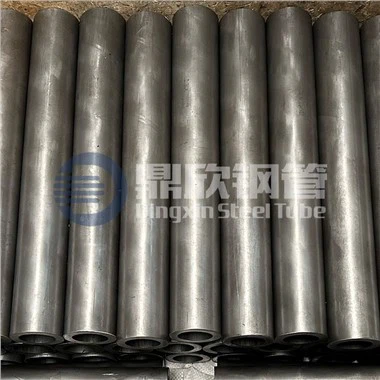
Hey there! As a supplier of A519 tubing, I've come across many situations where the straightness of the tubing is out of tolerance. It's a common issue that can affect the performance and usability of the tubing in various applications. In this blog, I'll share some practical ways to correct the straightness of A519 tubing when it goes out of spec.
First off, let's understand why straightness matters. A519 tubing is used in a wide range of industries, like automotive, aerospace, and machinery. In these applications, the tubing needs to be straight to ensure proper fit, alignment, and functionality. If the straightness is off, it can lead to problems such as leaks, improper connections, and reduced overall performance.
Visual Inspection
The first step in correcting the straightness of A519 tubing is to conduct a thorough visual inspection. This helps you identify the areas where the tubing is bent or out of straight. You can use a straightedge or a laser alignment tool to check the tubing. Place the straightedge along the length of the tubing and look for gaps between the straightedge and the tubing. If you see gaps, that's a sign of a bend.
Manual Straightening
For minor bends, manual straightening can be a quick and effective solution. You'll need a few basic tools, like a hammer, a vice, and a block of wood. First, secure the tubing in the vice, making sure it's held firmly but not too tightly to avoid damaging it. Then, place the block of wood on the bent area and gently tap it with the hammer. Be careful not to hit too hard, as this can cause dents or cracks in the tubing. Keep checking the straightness as you go, and make adjustments as needed.
Roller Straightening
Roller straightening is a more precise method for correcting the straightness of A519 tubing. It involves passing the tubing through a set of rollers that apply pressure to straighten it. You can use a manual roller straightening machine or an automated one, depending on the volume and complexity of the job.
When using a roller straightening machine, make sure to set the rollers at the correct distance and pressure. This will depend on the diameter and wall thickness of the tubing. Start with a low pressure and gradually increase it until the tubing is straightened. Keep an eye on the tubing as it passes through the rollers to ensure it's being straightened evenly.


Heat Treatment
In some cases, heat treatment can be used to correct the straightness of A519 tubing. This method is more suitable for tubing that has significant bends or has been deformed due to high-stress applications. Heat treatment involves heating the tubing to a specific temperature and then cooling it slowly to relieve the internal stresses that are causing the bend.
However, heat treatment requires specialized equipment and expertise. You need to know the correct temperature and heating time for A519 tubing to avoid overheating or underheating, which can affect the material properties. It's best to consult with a professional heat treatment provider if you're considering this method.
Hydraulic Press Straightening
A hydraulic press can also be used to straighten A519 tubing. This method is ideal for larger diameter tubing or tubing with severe bends. Place the tubing on a flat surface and position the hydraulic press over the bent area. Apply pressure gradually until the tubing starts to straighten. Similar to other methods, keep checking the straightness as you go and make adjustments as needed.
Quality Control
After correcting the straightness of the A519 tubing, it's important to perform a final quality control check. Use the same inspection tools you used initially to ensure the tubing meets the required straightness tolerance. You can also measure the straightness using a coordinate measuring machine (CMM) for more accurate results.
Preventive Measures
To avoid issues with straightness in the future, it's important to take preventive measures during storage and handling. Store the tubing in a flat and stable area to prevent it from being bent or damaged. When transporting the tubing, make sure it's properly secured to avoid movement and potential bending.
Other Tubing Options
If you're in the market for different types of tubing, we also offer a variety of options, such as DIN 1630 ST37.4 ST52.4 NBK Seamless Tube, DIN 17200 C22/Ck22 C25/Ck25 C30/Ck30 C35/Ck35 C45/Ck45 C55/Ck55 Seamless Tube, and DIN2391 ST52 NBK Seamless Tube. These tubes also require proper straightness for optimal performance.
Conclusion
Correcting the straightness of A519 tubing is an important process that requires careful inspection, the right tools, and the appropriate techniques. Whether it's manual straightening, roller straightening, heat treatment, or using a hydraulic press, each method has its own advantages and is suitable for different situations. By following these steps and taking preventive measures, you can ensure that your A519 tubing meets the required straightness standards and performs well in your applications.
If you're interested in purchasing A519 tubing or have any questions about straightness correction, feel free to reach out to us. We're here to help you find the right solutions for your tubing needs.
References
- ASTM A519 Standard Specification for Carbon and Alloy Steel Seamless Mechanical Tubing
- Machinery's Handbook for Tubing Straightening Techniques