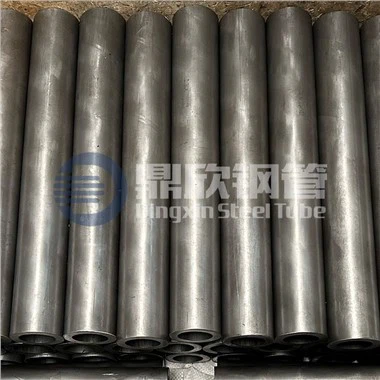
GB/T 3077 is a crucial national standard in China that specifies the technical requirements for alloy structural steels, which are widely used in various industries due to their excellent mechanical properties and hardenability. As a supplier of materials conforming to GB/T 3077, understanding the standard sample sizes specified for testing is of utmost importance to ensure the quality and compliance of our products. This blog will delve into the details of these standard sample sizes, their significance, and how they impact our business as a GB/T 3077 supplier.
Understanding GB/T 3077
GB/T 3077 defines the chemical composition, mechanical properties, heat treatment, and other technical requirements for alloy structural steels. These steels are commonly used in the manufacturing of mechanical parts, such as shafts, gears, bolts, and connecting rods, where high strength, toughness, and wear resistance are required. The standard plays a vital role in ensuring the interchangeability and quality of these materials in the market.
Importance of Standard Sample Sizes in Testing
Testing is an essential part of the quality control process for GB/T 3077 materials. It helps to verify that the materials meet the specified requirements in terms of chemical composition, mechanical properties, and other characteristics. The standard sample sizes specified in GB/T 3077 are carefully determined to ensure the accuracy and reliability of the test results. Using the correct sample sizes is crucial for obtaining representative data and making informed decisions about the quality of the materials.
Standard Sample Sizes for Different Tests
Chemical Analysis
For chemical analysis, the sample size depends on the type of analysis method and the element being analyzed. Generally, a sufficient amount of sample is required to ensure accurate determination of the chemical composition. GB/T 3077 provides guidelines on the minimum sample mass for different analysis methods, such as spectrometry and wet chemical analysis. For example, for the analysis of major elements, a sample mass of at least 100 grams may be required, while for trace elements, a smaller sample mass may be sufficient.
Tensile Testing
Tensile testing is one of the most important tests for evaluating the mechanical properties of GB/T 3077 materials. The standard specifies the dimensions and shape of the test specimens for tensile testing. The sample size for tensile testing is typically determined by the cross-sectional area of the specimen. For round specimens, the diameter and gauge length are specified, while for flat specimens, the width, thickness, and gauge length are defined. The standard sample sizes ensure that the test results are comparable and representative of the material's properties.
Hardness Testing
Hardness testing is used to measure the resistance of a material to indentation or scratching. GB/T 3077 provides guidelines on the sample size and preparation for different hardness testing methods, such as Brinell, Rockwell, and Vickers hardness testing. The sample size for hardness testing depends on the type of test and the size of the test piece. Generally, a flat and smooth surface is required for accurate hardness measurement, and the sample should be large enough to ensure that the test indenter does not interact with the edges or defects of the sample.


Impact Testing
Impact testing is used to evaluate the toughness and resistance of a material to sudden loading or impact. The standard specifies the dimensions and shape of the test specimens for impact testing, such as Charpy V-notch and Izod impact specimens. The sample size for impact testing is designed to simulate the real-world conditions and provide reliable data on the material's impact resistance.
Impact on Our Business as a GB/T 3077 Supplier
As a supplier of GB/T 3077 materials, understanding and adhering to the standard sample sizes for testing is crucial for our business. By using the correct sample sizes, we can ensure the accuracy and reliability of our test results, which in turn helps us to provide high-quality materials to our customers. Our commitment to quality and compliance with the standard also enhances our reputation in the market and builds trust with our customers.
In addition, providing detailed information about the standard sample sizes and testing procedures to our customers can help them to make informed decisions about the selection and use of our materials. We can offer technical support and guidance to our customers on how to prepare the samples for testing and interpret the test results. This value-added service can differentiate us from our competitors and strengthen our customer relationships.
Our Product Range
We offer a wide range of GB/T 3077 materials, including 1026 Seamless Tubing, Alloy Seamless Tube 20CrMo 30CrMo 35CrMo 42CrMo For Automotive Parts, and DIN2391 ST52 NBK Seamless Tube. These products are manufactured using high-quality raw materials and advanced production processes to ensure they meet the strict requirements of GB/T 3077.
Conclusion and Call to Action
In conclusion, the standard sample sizes specified in GB/T 3077 for testing are essential for ensuring the quality and compliance of alloy structural steels. As a supplier of GB/T 3077 materials, we are committed to adhering to these standards and providing our customers with high-quality products and excellent service.
If you are interested in purchasing GB/T 3077 materials or have any questions about our products and services, please feel free to contact us for further discussion and procurement negotiation. We look forward to the opportunity to work with you and meet your specific requirements.
References
- GB/T 3077 - Alloy structural steels
- Related technical literature on metal testing and quality control