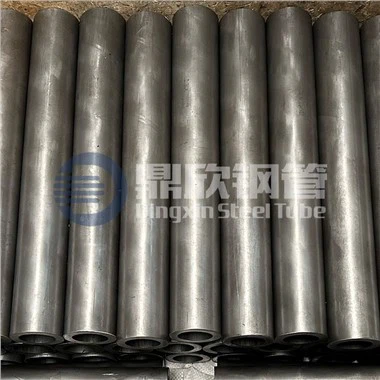
As a supplier of 42CrMo4+QT parts, I've encountered numerous cases where these high - performance components fail to meet the expected standards. Understanding the root causes of such failures is crucial not only for us as suppliers but also for our customers who rely on these parts in various applications. In this blog, I'll delve into the possible factors that lead to the failure of 42CrMo4+QT parts.
Material - Related Factors
Chemical Composition Deviations
The chemical composition of 42CrMo4 is precisely defined to achieve specific mechanical properties. Even minor deviations in the content of key elements such as chromium (Cr), molybdenum (Mo), and carbon (C) can have a significant impact on the performance of the part. For example, if the carbon content is higher than the specified range, the material may become more brittle, increasing the risk of cracking under stress. On the other hand, a lower - than - expected molybdenum content can reduce the hardenability and corrosion resistance of the 42CrMo4+QT part.


During the manufacturing process, strict quality control measures are in place to ensure the chemical composition is within the acceptable limits. However, issues can arise due to errors in the melting process, improper alloy addition, or inaccurate sampling for chemical analysis. As a supplier, we take multiple samples from each batch of raw materials and conduct thorough chemical analysis using advanced spectroscopy techniques to minimize the risk of composition - related failures.
Inclusions and Porosity
Inclusions are non - metallic particles that can be present in the steel matrix. These inclusions can act as stress concentrators, leading to premature crack initiation and propagation. Common inclusions in 42CrMo4 include oxides, sulfides, and silicates. The presence of large or clustered inclusions can significantly reduce the fatigue life and toughness of the part.
Porosity, on the other hand, refers to small voids or holes in the material. Porosity can be caused by gas entrapment during the casting process or improper solidification. Similar to inclusions, porosity can weaken the material structure and make the part more susceptible to failure under load. To address these issues, we use advanced refining techniques during steelmaking to reduce the presence of inclusions and optimize the casting process to minimize porosity.
Heat Treatment Issues
Improper Quenching
Quenching is a critical step in the heat treatment of 42CrMo4+QT parts. It involves rapidly cooling the heated material to transform the austenite into martensite, which provides high hardness and strength. However, if the quenching process is not carried out correctly, several problems can occur.
One common issue is quenching cracks. These cracks can form due to excessive thermal stress during rapid cooling. The rate of cooling is crucial; if it is too fast, the surface of the part will cool and contract much faster than the interior, creating high tensile stresses that can lead to cracking. To prevent quenching cracks, we carefully control the quenching medium and its temperature, as well as the immersion time of the part in the quenching medium.
Another problem related to improper quenching is incomplete transformation. If the quenching rate is too slow, the austenite may not fully transform into martensite, resulting in a softer and weaker material. This can lead to premature wear and deformation of the part during service.
Tempering Problems
Tempering is the process of reheating the quenched part to a specific temperature to relieve internal stresses and improve toughness. If the tempering temperature is too low or the tempering time is insufficient, the part will retain high internal stresses, making it prone to cracking. On the contrary, if the tempering temperature is too high or the tempering time is too long, the hardness and strength of the part will be significantly reduced.
As a supplier, we have well - established heat treatment procedures and use advanced heat treatment equipment with precise temperature and time control to ensure that the quenching and tempering processes are carried out accurately.
Machining and Surface Finish
Machining Damage
During the machining process, such as turning, milling, or grinding, the surface of the 42CrMo4+QT part can be damaged. Excessive cutting forces, improper cutting parameters, or dull cutting tools can cause surface cracks, residual stresses, and work - hardening. These surface defects can act as initiation points for fatigue cracks, especially in parts that are subjected to cyclic loading.
To minimize machining damage, we use high - quality cutting tools and optimize the cutting parameters based on the material properties of 42CrMo4+QT. Regular tool inspection and replacement are also carried out to ensure consistent machining quality.
Surface Finish
The surface finish of a part can have a significant impact on its performance. A rough surface finish can increase friction and wear, and it can also provide sites for corrosion to start. In addition, a poor surface finish can reduce the fatigue strength of the part. We pay close attention to the surface finish requirements of our customers and use appropriate finishing processes, such as polishing or honing, to achieve the desired surface quality.
Design and Application - Related Factors
Design Flaws
The design of the 42CrMo4+QT part plays a crucial role in its performance. If the part is not designed properly, it may be subjected to excessive stress concentrations. For example, sharp corners, sudden changes in cross - section, or improper fillet radii can create areas of high stress, increasing the risk of failure.
As a supplier, we work closely with our customers during the design phase to provide technical advice and ensure that the part design is optimized for the intended application. We use finite element analysis (FEA) software to simulate the stress distribution in the part and identify potential areas of concern.
Overloading and Misapplication
In some cases, the failure of 42CrMo4+QT parts can be attributed to overloading or misapplication. If the part is used in an application where the load exceeds its design capacity, it will experience excessive stress and may fail prematurely. Similarly, if the part is used in an environment that is not compatible with its material properties, such as high - temperature or corrosive environments, it can also lead to failure.
We provide detailed technical specifications and usage guidelines to our customers to ensure that the 42CrMo4+QT parts are used correctly. However, it is also important for customers to communicate their specific application requirements clearly to us so that we can provide the most suitable parts.
Our Product Range and Advantages
We not only supply high - quality 42CrMo4+QT parts but also offer a wide range of other products, such as Alloy Seamless Tube 20CrMo 30CrMo 35CrMo 42CrMo For Automotive Parts, Cold Drawn Seamless Tube Q345B Q345D Q355B Q355D, and JIS G3444 STK290 STK400 STK500 STK490 STK540 Seamless Carbon Steel Tube. Our products are manufactured using state - of - the - art technology and strict quality control measures to ensure high performance and reliability.
Conclusion
The failure of 42CrMo4+QT parts can be caused by a variety of factors, including material - related issues, heat treatment problems, machining and surface finish issues, and design and application - related factors. As a supplier, we are committed to understanding these factors and taking proactive measures to prevent failures. We continuously improve our manufacturing processes, invest in advanced testing equipment, and work closely with our customers to ensure that our products meet the highest quality standards.
If you are interested in our products or have any questions about 42CrMo4+QT parts, please feel free to contact us for procurement and further discussions. We look forward to establishing long - term partnerships with you.
References
- ASM Handbook, Volume 4: Heat Treating, ASM International.
- Steel Heat Treatment: Metallurgy and Technologies, by Dieter Krauss.
- Mechanical Behavior of Materials, by Norman E. Dowling.