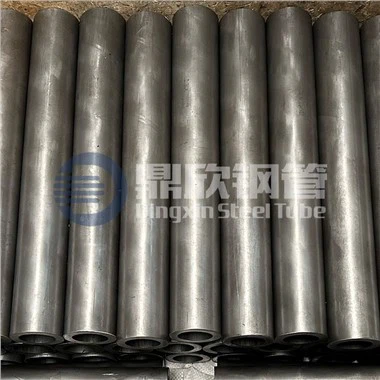
As a supplier of EN 10083 - 3 steels, I often receive inquiries from customers about the safety considerations when using these steels. EN 10083 - 3 is a European standard that specifies the technical delivery conditions for quenched and tempered steels for parts to be forged and machined. These steels are widely used in various industries, such as automotive, machinery, and construction, due to their excellent mechanical properties. However, like any other steel products, there are specific safety considerations that users need to be aware of.

Material Handling and Storage
One of the first safety aspects to consider is the handling and storage of EN 10083 - 3 steels. These steels are usually delivered in the form of bars, billets, or forgings, which can be heavy and bulky. Therefore, proper lifting equipment and techniques should be used to avoid accidents during handling. Forklifts, cranes, or hoists with appropriate load - capacities should be employed, and operators must be trained to use them safely.
When it comes to storage, EN 10083 - 3 steels should be stored in a dry and well - ventilated area. Moisture can cause rusting, which not only affects the appearance of the steel but also its mechanical properties. The steel should be stored on pallets or racks to keep it off the ground and prevent contact with water. Additionally, different grades of steel should be stored separately to avoid confusion and ensure that the correct material is used in production.
Machining and Fabrication
During the machining and fabrication processes of EN 10083 - 3 steels, several safety issues need to be addressed. Firstly, when cutting, grinding, or drilling these steels, there is a risk of generating metal chips and dust. These particles can be hazardous if inhaled, as they may cause respiratory problems. Therefore, appropriate personal protective equipment (PPE) such as dust masks and goggles should be worn. Ventilation systems should also be in place to remove the dust from the work area.
Moreover, the high strength of EN 10083 - 3 steels means that they require more power and force to machine compared to some other steels. This can put additional stress on the cutting tools and machinery. Operators should ensure that the cutting tools are sharp and in good condition to prevent tool breakage, which can lead to flying debris and potential injuries. Regular maintenance of the machining equipment is also essential to keep it operating safely.
Heat Treatment
Heat treatment is a crucial process for EN 10083 - 3 steels to achieve the desired mechanical properties. However, it also poses significant safety risks. During quenching, the steel is rapidly cooled in a quenching medium, such as oil or water. This process can generate a large amount of heat and steam, which can cause burns if proper safety measures are not taken. Workers should wear heat - resistant gloves, aprons, and face shields when handling the hot steel and the quenching medium.
The quenching medium itself can also be a hazard. Oil - based quenching media are flammable, and there is a risk of fire if the oil is overheated or comes into contact with an ignition source. Therefore, fire - prevention measures such as fire extinguishers and proper ventilation should be in place. Water - based quenching media may cause corrosion if not properly maintained, and they can also lead to the formation of steam, which can be dangerous if it accumulates in an enclosed space.
Welding
Welding EN 10083 - 3 steels requires special attention to safety. These steels have a relatively high carbon content, which can make them prone to cracking during welding. Pre - heating and post - heating are often necessary to reduce the risk of cracking. However, pre - heating the steel to high temperatures can be a fire hazard, and workers need to be careful when using heating equipment.
In addition, welding produces fumes and gases that are harmful to health. The fumes may contain metals such as chromium and nickel, which can cause lung diseases and other health problems. Adequate ventilation systems should be installed to remove the fumes from the welding area, and welders should wear respirators to protect themselves from inhaling the harmful substances.
Corrosion Protection
Although EN 10083 - 3 steels have good mechanical properties, they are susceptible to corrosion in certain environments. Corrosion can weaken the steel and compromise its structural integrity, leading to safety hazards. Therefore, appropriate corrosion protection measures should be taken.
One common method is to apply a protective coating to the steel surface. There are various types of coatings available, such as paint, galvanizing, and powder coating. Each coating has its own advantages and disadvantages, and the choice of coating depends on the specific application and the environment in which the steel will be used.
Another way to prevent corrosion is to control the environment. For example, in a humid environment, dehumidifiers can be used to reduce the moisture level. In an industrial environment with chemical pollutants, the steel should be protected from direct contact with these chemicals.
Compatibility with Other Materials
When using EN 10083 - 3 steels in a structure or a product, it is important to consider their compatibility with other materials. For example, if the steel is in contact with a different metal, there may be a risk of galvanic corrosion. Galvanic corrosion occurs when two different metals are in electrical contact in the presence of an electrolyte, and it can cause rapid corrosion of one of the metals.
To avoid galvanic corrosion, proper insulation or isolation methods should be used between different metals. For example, non - conductive gaskets or coatings can be used to separate the steel from other metals.
End - Use Applications
The safety considerations of EN 10083 - 3 steels also depend on their end - use applications. In the automotive industry, these steels are used in critical components such as axles and crankshafts. Any failure of these components can lead to serious accidents. Therefore, strict quality control and testing procedures should be in place during the manufacturing process to ensure the reliability of the components.
In the construction industry, EN 10083 - 3 steels are used in structural members. The design and installation of these members should comply with relevant building codes and standards to ensure the safety of the building.

Related Products and Their Safety
As a supplier, I also offer other related products such as [DIN 2391 ST35 ST45 ST52 BK BKW BKS GBK NBK Precision Seamless Tube]( /automotive - tube/din - 2391 - st35 - st45 - st52 - bk - bkw - bks - gbk - nbk.html), [ASTM A519 SAE AISI 1010 1020 1026 1045 1541 4130 4140 Mechanical Tubing]( /automotive - tube/astm - a519 - sae - aisi - 1010 - 1020 - 1026 - 1045 - 1541.html), and [EN 10305 - 1 E215 E235 E355 +C+SR+A+N Cold Drawn Seamless Tube]( /automotive - tube/en - 10305 - 1 - e215 - e235 - e355 - c - sr - a - n - cold - drawn.html). Similar safety considerations apply to these products. For example, during the handling and storage of these tubes, proper equipment and techniques should be used to prevent damage and ensure safety.
Conclusion
In conclusion, there are indeed specific safety considerations when using EN 10083 - 3 steels. From material handling and storage to machining, heat treatment, welding, and end - use applications, every step requires careful attention to safety. By being aware of these safety issues and taking appropriate measures, users can ensure the safe and efficient use of EN 10083 - 3 steels.
If you are interested in purchasing EN 10083 - 3 steels or any of our related products, please feel free to contact us for further details and to discuss your specific requirements. We are committed to providing high - quality products and excellent service to meet your needs.
References
- European Committee for Standardization. (Year). EN 10083 - 3: Technical delivery conditions for quenched and tempered steels for parts to be forged and machined.
- Various industry safety guidelines and regulations related to steel handling, machining, and fabrication.