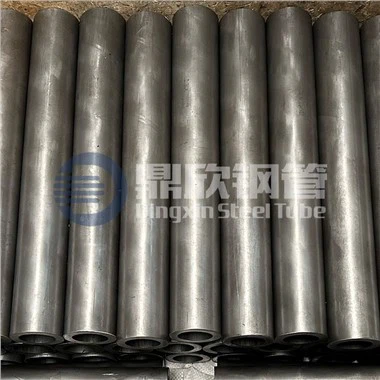
Can A519 tubing be used in corrosive environments? This is a question that many customers in various industries often ask. As a supplier of A519 tubing, I'd like to delve into this topic and provide a comprehensive analysis to help you make informed decisions.
Understanding A519 Tubing
A519 tubing is a type of seamless carbon and alloy steel mechanical tubing that adheres to the ASTM A519 standard. This standard covers a wide range of grades, each with specific chemical and mechanical properties designed for different applications. The tubing is known for its high strength, good machinability, and precise dimensional control, making it suitable for a variety of mechanical and structural uses, such as automotive components, machinery parts, and hydraulic systems.
Corrosive Environments: A Challenge
Corrosive environments are characterized by the presence of substances that can cause the deterioration of materials through chemical or electrochemical reactions. These substances can include acids, alkalis, salts, and oxygen. Common examples of corrosive environments are coastal areas with high salt content in the air, industrial settings with chemical fumes, and wastewater treatment plants.


When a material is exposed to a corrosive environment, it can experience various forms of corrosion, such as uniform corrosion, pitting corrosion, crevice corrosion, and stress corrosion cracking. These forms of corrosion can weaken the material, reduce its structural integrity, and ultimately lead to failure.
Factors Affecting the Use of A519 Tubing in Corrosive Environments
Chemical Composition
The chemical composition of A519 tubing plays a crucial role in its corrosion resistance. Different grades of A519 tubing have varying amounts of alloying elements, such as chromium, nickel, and molybdenum. These elements can form a protective oxide layer on the surface of the tubing, which can prevent or slow down the corrosion process. For example, grades with higher chromium content tend to have better corrosion resistance in oxidizing environments.
Surface Finish
The surface finish of the tubing can also affect its corrosion resistance. A smooth surface finish can reduce the likelihood of corrosion initiation by minimizing the areas where corrosive substances can accumulate. On the other hand, a rough surface finish can provide sites for corrosion to start, such as scratches, pits, and crevices.
Environmental Conditions
The specific environmental conditions, such as temperature, humidity, and the concentration of corrosive substances, can significantly impact the corrosion rate of A519 tubing. Higher temperatures and humidity levels generally accelerate the corrosion process, while lower concentrations of corrosive substances can reduce the corrosion rate.
Assessing the Suitability of A519 Tubing in Corrosive Environments
Laboratory Testing
One way to determine the suitability of A519 tubing in a specific corrosive environment is through laboratory testing. This can involve exposing samples of the tubing to simulated corrosive conditions and monitoring the corrosion rate over a period of time. The results of these tests can provide valuable information about the tubing's corrosion resistance and help predict its performance in real-world applications.
Field Experience
Another important factor to consider is field experience. By looking at how A519 tubing has performed in similar corrosive environments in the past, we can gain insights into its long-term durability and reliability. This can involve consulting with other users, reviewing case studies, and analyzing historical data.
Mitigation Strategies
If A519 tubing is to be used in a corrosive environment, there are several mitigation strategies that can be employed to enhance its corrosion resistance.
Coating
Applying a protective coating to the surface of the tubing is a common method to prevent corrosion. Coatings can act as a barrier between the tubing and the corrosive environment, reducing the contact between them. There are various types of coatings available, such as paint, epoxy, and zinc plating, each with its own advantages and limitations.
Cathodic Protection
Cathodic protection is a technique that involves making the tubing the cathode of an electrochemical cell, which can prevent or slow down the corrosion process. This can be achieved by either using a sacrificial anode or an impressed current system.
Material Selection
In some cases, it may be necessary to select a different grade of A519 tubing or a different material altogether that has better corrosion resistance. For example, if the environment is highly acidic, a grade with higher chromium and nickel content may be more suitable.
Our Product Range
As a supplier of A519 tubing, we offer a wide range of products to meet the diverse needs of our customers. In addition to standard A519 tubing, we also provide Cold Drawn Seamless Tube 20Cr 40Cr, JIS G4051 S10C S20C S35C S45C Seamless Tube, and DIN 1630 ST37.4 ST52.4 NBK Seamless Tube. These products are manufactured to the highest quality standards and can be customized to meet your specific requirements.
Conclusion
In conclusion, the use of A519 tubing in corrosive environments depends on several factors, including the chemical composition, surface finish, and environmental conditions. While A519 tubing may not be suitable for all corrosive environments, with proper assessment, mitigation strategies, and material selection, it can be used effectively in many applications.
If you are considering using A519 tubing in a corrosive environment, we recommend consulting with our technical experts. We have the knowledge and experience to help you select the right product and provide you with the necessary guidance on corrosion prevention and mitigation. Contact us today to start a discussion about your specific needs and explore the best solutions for your project.
References
- ASTM International. (2023). ASTM A519 Standard Specification for Seamless Carbon and Alloy Steel Mechanical Tubing.
- Uhlig, H. H., & Revie, R. W. (2019). Corrosion and Corrosion Control: An Introduction to Corrosion Science and Engineering. Wiley.
- Fontana, M. G. (1986). Corrosion Engineering. McGraw-Hill.