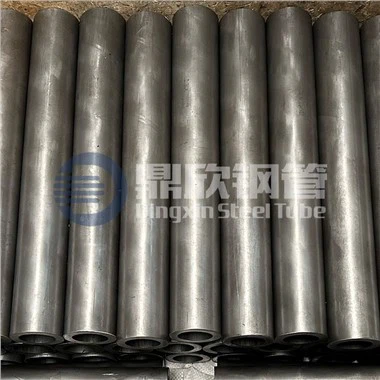
What is the Weight per Foot of 4130 Tubing?
As a supplier of 4130 tubing, I often get asked about the weight per foot of this popular material. Understanding the weight per foot is crucial for various applications, from automotive to aerospace, as it helps in design, cost - estimation, and transportation planning. In this blog post, I'll delve into the factors that influence the weight per foot of 4130 tubing and how you can calculate it.
Understanding 4130 Tubing
4130 tubing is a low - alloy steel that contains chromium and molybdenum. These alloying elements give 4130 tubing excellent strength, toughness, and weldability. It is commonly used in applications where high strength and good formability are required, such as in the manufacturing of aircraft frames, automotive parts, and machinery components.
The weight per foot of 4130 tubing is not a fixed value. It depends on two main factors: the outer diameter (OD) and the wall thickness (WT) of the tubing. As the outer diameter increases and the wall thickness gets thicker, the weight per foot of the tubing will also increase.
Factors Affecting the Weight per Foot
- Outer Diameter: The outer diameter of the tubing is the measurement across the outside of the tube. A larger outer diameter means there is more material in the cross - section of the tube, which directly contributes to a higher weight per foot. For example, a 4130 tube with an outer diameter of 2 inches will weigh more per foot than a tube with an outer diameter of 1 inch, assuming the wall thickness is the same.
- Wall Thickness: The wall thickness is the distance between the inner and outer surfaces of the tube. A thicker wall means more steel is present in the tube, resulting in a greater weight per foot. If we have two tubes with the same outer diameter, the one with a thicker wall will weigh more.
Calculating the Weight per Foot
The weight per foot of 4130 tubing can be calculated using the following formula:


[W = 10.69\times WT\times(OD - WT)]
where (W) is the weight per foot in pounds, (OD) is the outer diameter in inches, and (WT) is the wall thickness in inches.
Let's take an example. Suppose we have a 4130 tube with an outer diameter of 3 inches and a wall thickness of 0.125 inches.
First, substitute the values into the formula:
[W = 10.69\times0.125\times(3 - 0.125)]
[W = 10.69\times0.125\times2.875]
[W = 10.69\times0.359375]
[W\approx3.84] pounds per foot
Importance of Knowing the Weight per Foot
- Design Considerations: In engineering and design, knowing the weight per foot of 4130 tubing is essential for ensuring that the structure or component can support the intended load. For example, in aircraft design, every pound of weight matters. Designers need to precisely calculate the weight of the tubing used in the frame to optimize the aircraft's performance, fuel efficiency, and safety.
- Cost Estimation: The cost of 4130 tubing is often based on its weight. By knowing the weight per foot, you can accurately estimate the cost of the tubing required for a project. This helps in budgeting and cost - control, especially for large - scale projects.
- Transportation Planning: The weight of the tubing affects transportation costs. Heavier tubing requires more fuel to transport and may also require special handling equipment. By calculating the weight per foot, you can plan the most cost - effective and efficient way to transport the tubing.
Different Applications and Weight Requirements
In different industries, the weight requirements for 4130 tubing can vary significantly.
In the automotive industry, 4130 tubing is used in roll cages, suspension components, and exhaust systems. For roll cages, a balance between strength and weight is crucial. A lighter roll cage can improve the vehicle's performance, but it must still provide adequate protection in case of an accident. So, automotive engineers carefully select the outer diameter and wall thickness of the 4130 tubing to meet these requirements.
In the aerospace industry, weight is a critical factor. Aircraft manufacturers strive to use the lightest possible materials without sacrificing strength. 4130 tubing is often used in aircraft frames, but the tubing is typically designed with thinner walls and optimized outer diameters to reduce weight.
Our Product Range
As a supplier of 4130 tubing, we offer a wide range of outer diameters and wall thicknesses to meet the diverse needs of our customers. Whether you are working on a small - scale automotive project or a large - scale aerospace application, we can provide you with the right 4130 tubing.
In addition to 4130 tubing, we also supply other types of mechanical tubing, such as ASTM A519 SAE AISI 1010 1020 1026 1045 1541 4130 4140 Mechanical Tubing, DIN 2391 ST35 ST45 ST52 BK BKW BKS GBK NBK Precision Seamless Tube, and DIN2391 ST52 BK Seamless Tube. Our products are manufactured to high - quality standards, ensuring excellent performance and reliability.
Contact Us for Your Tubing Needs
If you are interested in purchasing 4130 tubing or any of our other products, we encourage you to contact us for a detailed discussion. Our team of experts can help you select the right tubing based on your specific requirements, including the desired weight per foot. We can also provide you with accurate quotes and delivery schedules.
Whether you are a small - business owner, an engineer, or a large - scale manufacturer, we are committed to providing you with the best products and services. Don't hesitate to reach out to us to start your tubing procurement process.
References
- ASM Handbook Volume 1: Properties and Selection: Irons, Steels, and High - Performance Alloys
- Machinery's Handbook, 31st Edition