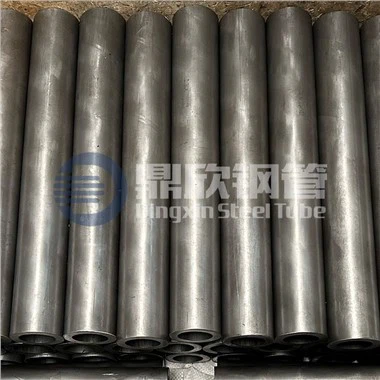
Can AISI 4140 Tube Be Used in High - Pressure Applications?
As a trusted supplier of AISI 4140 tubes, I often get asked whether these tubes are suitable for high - pressure applications. In this blog, I'll explore the properties of AISI 4140 tubes and evaluate their viability in high - pressure scenarios.
Understanding AISI 4140 Tubes
AISI 4140 is a chromium - molybdenum alloy steel. This type of steel is well - known for its excellent combination of strength, toughness, and wear resistance. It has a relatively high carbon content, along with chromium and molybdenum as alloying elements. Chromium enhances the hardenability and corrosion resistance of the steel, while molybdenum improves its strength at elevated temperatures and helps prevent brittleness.
The manufacturing process of AISI 4140 tubes can vary, including hot - rolling and cold - drawing. Cold - drawn AISI 4140 tubes, like the Cold Drawn Seamless Tube 20Cr 40Cr, often have better dimensional accuracy and surface finish compared to hot - rolled ones. They also exhibit improved mechanical properties due to the cold - working process.
High - Pressure Requirements
In high - pressure applications, materials need to meet several key requirements. First and foremost, they must have sufficient strength to withstand the internal pressure without deforming or failing. The yield strength and ultimate tensile strength of the material are critical factors. Yield strength determines the point at which the material begins to deform plastically, while ultimate tensile strength is the maximum stress the material can withstand before breaking.
Another important aspect is the ability to resist fatigue. High - pressure systems often experience cyclic loading, which can lead to fatigue cracks over time. A material with good fatigue resistance will be less likely to develop these cracks and thus have a longer service life in high - pressure environments.
Corrosion resistance is also crucial, especially in applications where the tube may come into contact with corrosive substances or be exposed to harsh environmental conditions. A corroded tube can weaken over time, reducing its ability to withstand high pressures.
AISI 4140 Tubes in High - Pressure Scenarios
Let's analyze how AISI 4140 tubes measure up against the high - pressure requirements.
Strength
AISI 4140 tubes typically have high yield and ultimate tensile strengths. The yield strength of AISI 4140 can range from around 60,000 psi (414 MPa) in the annealed condition to over 120,000 psi (827 MPa) after heat treatment. The ultimate tensile strength can be as high as 150,000 psi (1034 MPa) or more, depending on the heat treatment and manufacturing process. These high strength values make AISI 4140 tubes capable of withstanding significant internal pressures.
For example, in hydraulic systems where pressures can reach several thousand psi, AISI 4140 tubes can provide the necessary strength to contain the fluid under pressure. The high strength - to - weight ratio of AISI 4140 also makes it an attractive option, as it allows for the design of lighter - weight high - pressure components without sacrificing performance.
Fatigue Resistance
The alloying elements in AISI 4140 contribute to its good fatigue resistance. Chromium and molybdenum help to refine the grain structure of the steel, which in turn improves its ability to withstand cyclic loading. In high - pressure applications such as oil and gas pipelines, where the tubes are subject to pressure fluctuations, AISI 4140 tubes can offer reliable performance over an extended period.
Corrosion Resistance
While AISI 4140 is not a stainless steel and does not have the same level of corrosion resistance as some stainless alloys, it can still be used in many high - pressure applications with appropriate corrosion protection measures. For instance, in environments with mild corrosion, a simple coating or painting can be applied to the tube to prevent rusting. In more severe corrosive conditions, the tubes can be treated with more advanced corrosion - resistant coatings or even used in combination with corrosion - resistant liners.
Comparing with Other Tube Materials
It's also useful to compare AISI 4140 tubes with other common tube materials used in high - pressure applications.


DIN 2391 ST35 ST45 ST52 BK BKW BKS GBK NBK Precision Seamless Tube
The DIN 2391 ST35 ST45 ST52 BK BKW BKS GBK NBK Precision Seamless Tube is a group of carbon steel tubes. While these tubes are cost - effective and widely used, they generally have lower strength and corrosion resistance compared to AISI 4140 tubes. AISI 4140's alloying elements give it an edge in high - pressure and more demanding applications.
JIS G4051 S10C S20C S35C S45C Seamless Tube
The JIS G4051 S10C S20C S35C S45C Seamless Tube is another type of carbon steel tube. Similar to the DIN - specified tubes, they are mainly carbon - based and may not have the same level of strength and performance in high - pressure applications as AISI 4140 tubes. AISI 4140's enhanced properties make it a better choice for applications where high pressure and durability are crucial.
Limitations and Considerations
Although AISI 4140 tubes have many advantages for high - pressure applications, there are also some limitations and considerations.
Cost
AISI 4140 tubes are generally more expensive than plain carbon steel tubes due to the alloying elements and the more complex manufacturing processes involved. This cost factor needs to be considered when selecting materials for a high - pressure project.
Weldability
While AISI 4140 is weldable, special precautions need to be taken during the welding process. Pre - heating and post - weld heat treatment are often required to prevent the formation of hard and brittle zones in the weld area, which could reduce the strength and toughness of the tube.
Size and Availability
Depending on the specific requirements of the high - pressure application, the availability of AISI 4140 tubes in the desired sizes and lengths may be limited. It's important to work with a reliable supplier who can provide the necessary tubes in a timely manner.
Conclusion
In conclusion, AISI 4140 tubes can be a suitable choice for many high - pressure applications. Their high strength, good fatigue resistance, and the ability to be protected against corrosion make them well - suited for use in hydraulic systems, oil and gas pipelines, and other high - pressure environments. However, factors such as cost, weldability, and size availability need to be carefully considered.
If you are looking for high - quality AISI 4140 tubes for your high - pressure projects, I encourage you to reach out to discuss your specific requirements. We have a wide range of AISI 4140 tubes in various sizes and specifications, and our team of experts can provide you with the best solutions for your applications.
References
- ASM Handbook Volume 1: Properties and Selection: Irons, Steels, and High - Performance Alloys
- Steel Design Guide Series: High - Strength Steel for Structural Applications