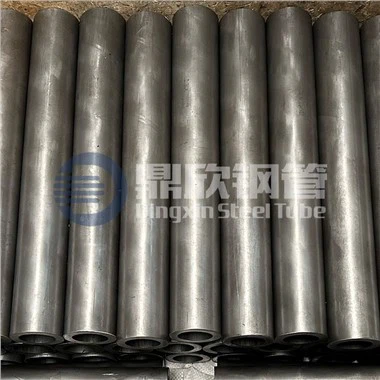
Hey there! I'm a supplier of DIN 2391 ST52, and I often get asked if this material can be used in the energy industry. So, I thought I'd write this blog to share my insights on the topic.
First off, let's talk a bit about what DIN 2391 ST52 is. DIN 2391 is a German standard for seamless steel tubes, and ST52 is a specific grade within that standard. ST52 is a low-alloy, high-strength steel with good weldability and formability. It's commonly used in various industries, such as automotive, machinery, and construction.
Now, the energy industry is a broad term that encompasses many different sectors, including oil and gas, renewable energy (like wind and solar), and power generation. Each of these sectors has its own unique requirements and challenges, so whether DIN 2391 ST52 can be used depends on the specific application.
Oil and Gas Industry
In the oil and gas industry, pipes and tubes are used for a variety of purposes, such as transporting oil and gas from the wellhead to processing facilities, and for drilling operations. The materials used in this industry need to be able to withstand high pressures, corrosive environments, and extreme temperatures.
DIN 2391 ST52 has some properties that make it a potential candidate for certain applications in the oil and gas industry. Its high strength means it can handle high-pressure situations without deforming or failing. And its good weldability is a plus, as welding is often required to connect different sections of pipes.
However, the oil and gas industry also has some strict requirements when it comes to corrosion resistance. ST52 is not inherently highly corrosion-resistant, so it might need to be coated or treated to protect it from the harsh chemicals and environments it would encounter in this industry. For example, in offshore oil and gas platforms, where the saltwater environment is extremely corrosive, a simple ST52 tube might not last long without proper protection.
If the application doesn't involve direct contact with highly corrosive substances or if proper corrosion protection measures are in place, DIN 2391 ST52 could be used for things like structural support in onshore oil and gas facilities. It can also be used in some non-critical piping systems where the pressure and corrosion requirements are not as extreme.
Renewable Energy Industry
Let's take a look at the renewable energy sector. In wind energy, for instance, steel tubes are used in the construction of wind turbine towers. These towers need to be strong enough to support the weight of the turbine and withstand the forces of wind and weather.
DIN 2391 ST52's high strength makes it suitable for this kind of application. The towers need to be able to resist bending and buckling under the wind loads, and ST52 can provide the necessary structural integrity. Its formability also allows for the manufacturing of complex tower designs.
In solar energy, tubes can be used in the support structures for solar panels. Again, the strength and formability of DIN 2391 ST52 make it a viable option. These structures need to be able to hold the panels in place and withstand environmental factors like wind and snow.
However, just like in the oil and gas industry, corrosion can be an issue. In outdoor solar and wind installations, the tubes are exposed to the elements, so they need to be protected against rust and other forms of corrosion. This could involve applying a protective coating or using a more corrosion-resistant variant of ST52 if available.
Power Generation Industry
In power generation, whether it's from fossil fuels, nuclear, or hydro sources, pipes are used for steam, water, and other fluid transport. The requirements here include high-temperature and high-pressure resistance, as well as resistance to erosion and corrosion.
DIN 2391 ST52 can handle moderate temperatures and pressures. For example, in some secondary piping systems in a power plant where the conditions are not as extreme, it could be used. But for the main steam pipes in a high-pressure boiler, a more specialized high-temperature and high-pressure resistant material might be needed.
The weldability of ST52 is beneficial in power plant construction, as it allows for efficient installation and connection of different pipe sections. But again, corrosion protection is crucial, especially in areas where the pipes come into contact with water or other corrosive fluids.
Advantages of Using DIN 2391 ST52 in the Energy Industry
One of the main advantages of DIN 2391 ST52 is its cost-effectiveness. Compared to some high-end, specialized materials used in the energy industry, ST52 is relatively inexpensive. This can be a big factor for companies looking to keep their costs down, especially in large-scale projects.
Another advantage is its availability. As a commonly used steel grade, it's easier to source DIN 2391 ST52 tubes in different sizes and quantities. This means less lead time for procurement, which can speed up the project timeline.
Limitations and Considerations
As mentioned earlier, corrosion resistance is a major limitation of DIN 2391 ST52. Companies need to factor in the cost of corrosion protection measures when considering using this material. This could include the cost of coatings, cathodic protection systems, or regular maintenance and inspection.
Also, for applications with extremely high temperatures or pressures, ST52 might not have the necessary properties. In such cases, more advanced materials would be required.
Other Related Products
If you're interested in other types of tubes, we also offer DIN2391 ST52 NBK Seamless Tube, Motorcycle Front Fork Tube SAE 1536 1541, and Cold Drawn Seamless Tube 20Cr 40Cr. These products have their own unique properties and are suitable for different applications.


Conclusion
So, can DIN 2391 ST52 be used in the energy industry? The answer is yes, but with some limitations and considerations. It can be a cost-effective and viable option for certain applications, especially those with moderate requirements for pressure, temperature, and corrosion resistance. However, for more demanding applications, additional protection or the use of more specialized materials might be necessary.
If you're in the energy industry and think DIN 2391 ST52 could be a good fit for your project, I'd love to have a chat with you. We can discuss your specific requirements and see how we can provide the right solution. Don't hesitate to reach out for more information and to start a procurement discussion.
References
- DIN 2391 Standard Documentation
- Industry Reports on Steel Usage in Energy Sector