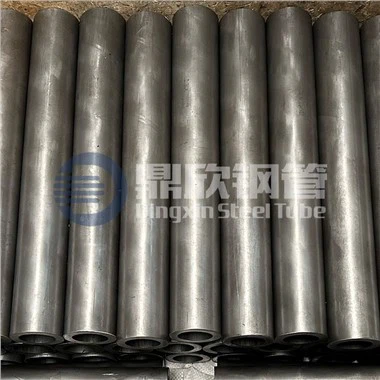
As a supplier of DIN 2391 ST52 steel products, I often find myself engaged in discussions around the versatility and applications of this high - quality material. One question that frequently arises is whether DIN 2391 ST52 can be used in the sports equipment industry. In this blog, we'll explore the mechanical properties of DIN 2391 ST52, its potential applications in sports equipment, and compare it with other materials commonly used in this industry.
Understanding DIN 2391 ST52
DIN 2391 ST52 is a type of cold - drawn seamless steel tube defined by the German standard DIN 2391. This steel grade is known for its excellent balance of strength, toughness, and formability. The mechanical properties of DIN 2391 ST52 make it a prime candidate for various engineering applications.
The minimum yield strength of DIN 2391 ST52 is around 355 N/mm², and the tensile strength ranges from 490 - 630 N/mm². This high strength allows the material to bear significant loads without permanent deformation. At the same time, it has good ductility, which means it can be formed into different shapes during the manufacturing process without breaking.


A number of factors contribute to the popularity of DIN 2391 ST52 in multiple industries. Firstly, its precise dimensional accuracy ensures a high - quality finish in the final products. Secondly, the seamless nature of the tube eliminates potential weak points that could occur in welded tubes, enhancing the overall reliability of the component.
Potential Applications in the Sports Equipment Industry
Gym Equipment
In the world of gym equipment, strength and durability are of utmost importance. Machines such as dumbbells racks, weightlifting platforms, and multi - station gyms require a material that can withstand heavy use and repeated impacts. DIN 2391 ST52's high strength makes it an ideal choice for these applications. For example, the frames of weightlifting platforms need to support the intense pressure exerted when heavy weights are dropped. The high yield strength of DIN 2391 ST52 ensures that the frame remains intact and performs well under such extreme conditions.
Bicycles
Bicycles need a material that combines lightness with sufficient strength. Although DIN 2391 ST52 is not the lightest material available, its strength - to - weight ratio is favorable. The frame of a bicycle is the backbone of the entire vehicle, and it needs to be able to handle the forces generated during riding, including pedaling, braking, and cornering. The seamless tubes of DIN 2391 ST52 can be shaped into complex geometries to meet the aerodynamic and ergonomic requirements of modern bicycles. Moreover, the good formability of this steel allows manufacturers to create unique frame designs that enhance the overall performance of the bike.
Outdoor Sports Equipment
Outdoor sports such as skiing, snowboarding, and camping also benefit from the properties of DIN 2391 ST52. Ski poles, for instance, need to be strong enough to support the skier's weight and absorb shock while being light enough to use for long periods. DIN 2391 ST52 can be fabricated into ski poles with the right balance of strength and weight. In camping equipment, like tent poles, the durability and corrosion resistance (with proper coating) of DIN 2391 ST52 ensure a long - lasting and reliable product.
Comparison with Other Materials Used in Sports Equipment
Aluminium Alloys
Aluminium alloys are widely used in the sports equipment industry due to their low density. They are much lighter than DIN 2391 ST52, which makes them a popular choice for applications where weight is a critical factor, such as high - end bicycles. However, the strength of aluminium alloys is generally lower than that of DIN 2391 ST52. In applications that require high load - bearing capacity, such as heavy - duty gym equipment, steel like DIN 2391 ST52 is often a better option.
Carbon Fiber
Carbon fiber is renowned for its extremely high strength - to - weight ratio. It is commonly used in high - performance sports equipment, such as professional bicycles and racing skis. But carbon fiber is more expensive to produce and fabricate compared to DIN 2391 ST52. Additionally, carbon fiber components may be more prone to damage from impacts, while DIN 2391 ST52 offers better resistance to accidental knocks and dents.
Advantages of Using DIN 2391 ST52 in Sports Equipment
Cost - effectiveness
One of the significant advantages of DIN 2391 ST52 is its cost - effectiveness. Compared to more exotic materials like carbon fiber, the production cost of DIN 2391 ST52 is relatively low. This makes it an attractive option for sports equipment manufacturers who want to produce high - quality products at a reasonable price. The cost - effectiveness allows manufacturers to offer their products at a more competitive price point in the market, increasing their market share.
Availability and Standardization
DIN 2391 ST52 is a well - standardized material, which means it is readily available in the market. The standard specifications ensure consistent quality across different suppliers. This availability and standardization simplify the procurement process for sports equipment manufacturers. They can easily find reliable suppliers and expect consistent product quality, reducing the risk of production delays and quality issues.
Ease of Fabrication
As mentioned earlier, DIN 2391 ST52 has good formability. It can be easily cut, welded, bent, and machined into various shapes and sizes. This ease of fabrication allows sports equipment manufacturers to create customized designs to meet the specific needs of their customers. Whether it's a unique bicycle frame or a specialized gym machine, DIN 2391 ST52 can be shaped into the desired form with relative ease.
Our Product Offerings
As a supplier of DIN 2391 ST52, we provide a wide range of products to meet the diverse needs of the sports equipment industry. Our DIN2391 ST52 BK Seamless Tube is manufactured with high - precision processes, ensuring excellent dimensional accuracy and surface finish. We also offer DIN 2391 ST35 ST45 ST52 BK BKW BKS GBK NBK Precision Seamless Tube, which provides more options in terms of different steel grades and temper conditions.
In addition, we supply EN 10305 - 1 E215 E235 E355 +C+SR+A+N Cold Drawn Seamless Tube, which can also be considered for sports equipment applications depending on the specific requirements. Our products are subject to strict quality control measures to ensure that they meet or exceed the relevant industry standards.
Conclusion and Call to Action
In conclusion, DIN 2391 ST52 offers a compelling combination of strength, durability, cost - effectiveness, and ease of fabrication, making it a viable material for the sports equipment industry. Whether you are a manufacturer looking to produce gym equipment, bicycles, or outdoor sports gear, DIN 2391 ST52 can provide the performance you need.
If you are interested in learning more about our DIN 2391 ST52 products or would like to discuss potential applications in your sports equipment manufacturing process, we encourage you to reach out to us for a detailed consultation and procurement discussion. We are committed to providing high - quality products and excellent customer service to support your business.
References
- German Institute for Standardization (DIN). DIN 2391 standard documentation.
- Industry reports on materials used in sports equipment manufacturing.
- Engineering handbooks on the properties and applications of steel materials.