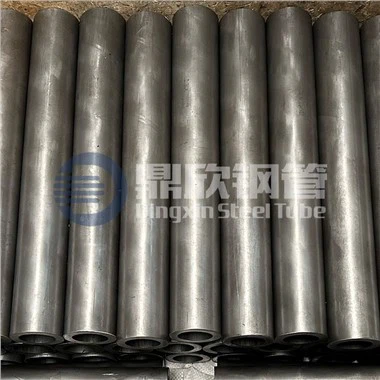
Hey there! As a supplier of ST35 BK, I often get asked if this material can be used in low - temperature environments. Let's dig into this topic and find out.
First off, let's understand what ST35 BK is. It's a type of steel tubing that's commonly used in various industries. It has certain properties that make it suitable for different applications. But when it comes to low - temperature conditions, we need to take a closer look at its characteristics.


One of the key factors to consider is the impact of low temperatures on the mechanical properties of ST35 BK. At low temperatures, steel can become more brittle. This is because the atoms in the steel structure move less freely, and the material loses some of its ductility. For ST35 BK, the reduction in ductility can be a concern, especially in applications where the tubing is subjected to stress or impact.
However, it's not all doom and gloom. The performance of ST35 BK in low - temperature environments depends on several factors. The first is the specific temperature range. If the temperature is just slightly below freezing, say around - 10°C to - 20°C, ST35 BK can still perform relatively well. But as the temperature drops further, say to - 40°C or lower, the risk of brittleness increases significantly.
Another factor is the heat treatment of the ST35 BK. Proper heat treatment can improve the material's toughness and make it more resistant to low - temperature brittleness. For example, quenching and tempering can refine the grain structure of the steel, which in turn enhances its mechanical properties at low temperatures.
The application also plays a crucial role. If the ST35 BK tubing is used in a static application, where it's not subjected to much stress or movement, it may be able to tolerate lower temperatures better. On the other hand, if it's used in a dynamic application, such as in a machine with moving parts, the risk of failure due to low - temperature brittleness is higher.
Now, let's talk about some real - world scenarios. In the automotive industry, ST35 BK is sometimes used for 1026 Seamless Tubing. In cold climates, the tubing needs to withstand the low temperatures without cracking or failing. If the vehicle is driven in areas where the temperature can drop to - 30°C or lower, special precautions need to be taken. This could include using heat - treated ST35 BK or adding insulation to the tubing.
In the manufacturing of Cold Drawn Seamless Tube 20Cr 40Cr, ST35 BK may also be involved. When these tubes are used in low - temperature environments, the same considerations apply. The manufacturer needs to ensure that the material is suitable for the expected temperature range and that the design of the tube can handle the stress at low temperatures.
The DIN 1630 ST37.4 ST52.4 NBK Seamless Tube standards also give us some insights. These standards define the requirements for seamless tubes, including ST35 BK. They specify certain mechanical properties that the tubing should meet, which can be used as a reference when evaluating its suitability for low - temperature applications.
So, can ST35 BK be used in low - temperature environments? The answer is it depends. With proper heat treatment, careful design, and consideration of the specific application and temperature range, it can be used in moderately low - temperature conditions. But for extremely cold environments, alternative materials may be a better choice.
If you're in the market for ST35 BK and have questions about its use in low - temperature environments, don't hesitate to reach out. I'm here to help you make the right decision for your project. Whether you need advice on material selection, heat treatment, or application design, I've got the expertise to guide you.
Let's have a chat about your requirements and see how we can work together to get the best results. I'm confident that with the right approach, we can find a solution that meets your needs and ensures the reliable performance of your equipment. So, don't wait any longer. Let's start the conversation and take the first step towards a successful project.
References
- General knowledge of steel properties and low - temperature behavior
- Industry standards related to steel tubing such as DIN 1630