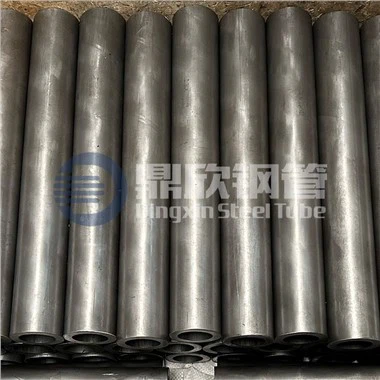
Hey there! As a supplier of E355+C, I often get asked about the regulations surrounding this material. In this blog, I'm gonna break down everything you need to know about the rules and guidelines for E355+C.
First off, let's talk about what E355+C actually is. E355+C is a type of steel. It's known for its good strength and toughness, which makes it suitable for a variety of applications, especially in the construction and engineering sectors. It's often used in structures where high - performance materials are required to withstand different loads and environmental conditions.
Standards and Specifications
There are several international and national standards that govern the production and use of E355+C. One of the most well - known standards is the European standard EN 10025 - 2. This standard specifies the technical delivery conditions for hot - rolled products of non - alloy and fine - grain structural steels. For E355+C, this standard defines the chemical composition, mechanical properties, and testing methods.
The chemical composition of E355+C is tightly regulated. It typically contains elements like carbon (C), silicon (Si), manganese (Mn), phosphorus (P), sulfur (S), and sometimes small amounts of other alloying elements. The maximum carbon content is usually limited to ensure good weldability and formability. The manganese content helps to improve the strength and toughness of the steel. Phosphorus and sulfur are kept at low levels because they can have a negative impact on the steel's properties, such as its ductility and corrosion resistance.
In terms of mechanical properties, EN 10025 - 2 sets requirements for things like yield strength, tensile strength, and elongation. The yield strength of E355+C is typically around 355 MPa, which is why it's called E355. The tensile strength usually falls within a certain range, and the elongation percentage indicates how much the steel can stretch before it breaks. These properties are crucial for ensuring that the steel can perform as expected in real - world applications.
Production Regulations
When it comes to producing E355+C, manufacturers have to follow strict procedures. The steelmaking process starts with the selection of high - quality raw materials. The melting and refining processes are carefully controlled to achieve the desired chemical composition. After that, the steel is hot - rolled into the desired shapes, such as sheets, plates, or tubes.
During the hot - rolling process, the temperature and rolling speed are critical factors. If the temperature is too high or too low, it can affect the grain structure of the steel, which in turn can impact its mechanical properties. The rolling speed also needs to be adjusted properly to ensure uniform deformation of the steel.


After the hot - rolling process, the steel may undergo heat treatment to further improve its properties. Heat treatment can involve processes like quenching and tempering, which can enhance the strength and toughness of the steel. However, these processes also need to be carried out according to specific regulations to avoid any negative effects on the steel.
Application - Specific Regulations
Depending on the application, there may be additional regulations for using E355+C. For example, in the construction industry, E355+C used in building structures has to comply with local building codes. These codes ensure that the structures are safe and can withstand various loads, such as wind, snow, and seismic forces.
In the automotive industry, E355+C may be used in the manufacturing of automotive parts. When used in this context, it has to meet the quality and safety standards set by the automotive manufacturers. For instance, it needs to have good fatigue resistance because automotive parts are often subjected to repeated loading.
If you're interested in different types of seamless tubes related to similar materials, you can check out these links: DIN 17200 C22/Ck22 C25/Ck25 C30/Ck30 C35/Ck35 C45/Ck45 C55/Ck55 Seamless Tube, Alloy Seamless Tube 20CrMo 30CrMo 35CrMo 42CrMo For Automotive Parts, and 1026 Seamless Tubing.
Quality Control and Testing
To ensure that E355+C meets all the regulations, quality control and testing are essential. Manufacturers usually conduct a series of tests on the steel. Chemical analysis is carried out to verify the chemical composition. This can be done using methods like spectroscopy, which can accurately determine the amount of each element in the steel.
Mechanical testing is also crucial. Tensile tests are performed to measure the yield strength and tensile strength of the steel. Impact tests, such as the Charpy V - notch test, are used to evaluate the steel's toughness at different temperatures. Hardness tests can also be carried out to check the hardness of the steel, which is related to its strength and wear resistance.
In addition to these tests, non - destructive testing methods may also be used. Ultrasonic testing can detect internal defects in the steel, such as cracks or inclusions. Magnetic particle testing is used to find surface and near - surface defects. These testing methods help to ensure that the E355+C is of high quality and meets all the regulatory requirements.
Regulatory Updates
It's important to note that regulations regarding E355+C are not static. They can change over time as new research and technologies emerge. For example, as environmental concerns become more prominent, there may be new regulations regarding the environmental impact of steel production. This could include requirements for reducing emissions during the steelmaking process or increasing the use of recycled materials.
Manufacturers and suppliers need to stay updated on these regulatory changes to ensure that their products remain compliant. This may involve investing in new technologies and processes to meet the new requirements.
Conclusion
In conclusion, the regulations regarding E355+C are comprehensive and cover various aspects of its production, properties, and application. These regulations are in place to ensure the quality, safety, and performance of the steel in different industries. As a supplier of E355+C, I make sure that all our products meet these regulations to provide our customers with high - quality materials.
If you're in the market for E355+C or have any questions about its regulations, I'd love to have a chat with you. Feel free to reach out and start a conversation about your procurement needs. We can discuss how our E355+C products can fit into your projects and meet your specific requirements.
References
- EN 10025 - 2: European standard for hot - rolled products of non - alloy and fine - grain structural steels.
- Various industry reports on steel production and application regulations.