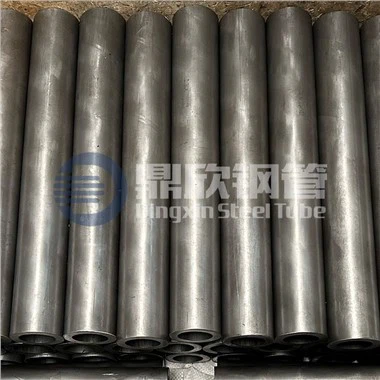
As a supplier of EN 10083 - 3 steels, I've witnessed firsthand the importance of understanding the formability of these materials. EN 10083 - 3 is a European standard that specifies the technical delivery conditions for quenched and tempered steels. The formability of steels defined by this standard is a crucial aspect that influences various industrial applications.
What is Formability in the Context of EN 10083 - 3?
Formability refers to the ability of a steel to undergo plastic deformation without cracking or fracturing. In the framework of EN 10083 - 3, formability is not just a single - parameter concept but is influenced by multiple factors. These factors include the chemical composition of the steel, its microstructure, and the mechanical properties such as yield strength, tensile strength, and elongation.
Chemical Composition
The chemical composition of EN 10083 - 3 steels plays a fundamental role in determining formability. Elements like carbon (C), manganese (Mn), silicon (Si), and alloying elements such as chromium (Cr), nickel (Ni), and molybdenum (Mo) have different effects on the steel's properties.
Carbon is one of the most critical elements. Higher carbon content generally increases the strength of the steel but reduces its formability. As carbon forms carbides in the steel matrix, it restricts the movement of dislocations during deformation, making the steel more brittle. EN 10083 - 3 steels are carefully formulated to balance the carbon content to achieve an acceptable level of formability while still meeting the required strength criteria.
Manganese is added to improve the hardenability of the steel and also helps in deoxidation. It can enhance the strength of the steel without a significant negative impact on formability. Silicon is often used as a deoxidizer and can increase the strength of the steel, but excessive silicon can lead to a decrease in formability.
Alloying elements like chromium, nickel, and molybdenum are added to improve specific properties such as corrosion resistance, high - temperature strength, and toughness. However, they can also affect formability. For example, chromium can form carbides and increase the hardness of the steel, potentially reducing its ability to be formed.
Microstructure
The microstructure of EN 10083 - 3 steels is another key factor in formability. After quenching and tempering, the steel can have different microstructures such as martensite, bainite, or a combination of ferrite and pearlite.
Martensitic steels are known for their high strength but low formability. Martensite has a very fine - grained and highly distorted structure, which makes it difficult for the steel to deform plastically. Bainitic steels offer a better balance between strength and formability compared to martensitic steels. The bainite microstructure consists of fine - grained ferrite and carbide particles, which allows for some degree of plastic deformation.
A ferrite - pearlite microstructure is generally more formable. Ferrite is a soft and ductile phase, while pearlite is a lamellar structure of ferrite and cementite. The presence of ferrite provides the steel with the ability to deform easily, and the pearlite contributes to the overall strength of the steel.
Mechanical Properties
Mechanical properties such as yield strength, tensile strength, and elongation are directly related to formability. Yield strength is the stress at which the steel begins to deform plastically. A lower yield strength generally indicates better formability because the steel can start to deform at a lower stress level.
Tensile strength is the maximum stress that the steel can withstand before fracture. While high tensile strength is desirable for many applications, it needs to be balanced with formability. Elongation is a measure of the amount of plastic deformation the steel can undergo before breaking. Higher elongation values are associated with better formability.
Testing the Formability of EN 10083 - 3 Steels
There are several testing methods used to evaluate the formability of EN 10083 - 3 steels.
Tensile Testing
Tensile testing is one of the most common methods. A test specimen is prepared according to the relevant standards and is pulled in a tensile testing machine until it fractures. During the test, the stress - strain curve is recorded. From this curve, the yield strength, tensile strength, and elongation can be determined. A high elongation value in the tensile test indicates good formability.
Bend Testing
Bend testing is also widely used to assess formability. A specimen is bent to a specific angle or radius, and the surface of the specimen is inspected for cracks. If no cracks are observed after bending, the steel is considered to have good formability. Bend testing is particularly useful for evaluating the ability of the steel to be formed into complex shapes.
Erichsen Testing
The Erichsen test is a cup - drawing test used to evaluate the deep - drawing formability of the steel. A circular blank is clamped between a die and a blank holder, and a punch is forced into the blank to form a cup - shaped part. The maximum depth to which the punch can penetrate without causing cracking is measured. A higher Erichsen value indicates better deep - drawing formability.
Applications of EN 10083 - 3 Steels Based on Formability
The formability of EN 10083 - 3 steels makes them suitable for a wide range of applications.
Automotive Industry
In the automotive industry, formability is crucial for manufacturing various components such as body panels, chassis parts, and engine components. EN 10083 - 3 steels with good formability can be easily shaped into complex geometries, which helps in reducing the weight of the vehicle while maintaining its structural integrity. For example, JIS G4051 S10C S20C S35C S45C Seamless Tube and 1026 Seamless Tubing are often used in automotive applications where formability and strength are both required.
Machinery Manufacturing
In machinery manufacturing, EN 10083 - 3 steels are used to make parts such as gears, shafts, and connecting rods. These parts often need to be formed into specific shapes during the manufacturing process. The formability of the steel ensures that these parts can be produced with high precision and without defects.
Construction Industry
In the construction industry, EN 10083 - 3 steels can be used for structural components that require some degree of formability. For example, DIN 2391 ST35 ST45 ST52 BK BKW BKS GBK NBK Precision Seamless Tube can be bent and shaped to fit the design requirements of buildings and bridges.
How Our Company Ensures Formability in EN 10083 - 3 Steels
As a supplier of EN 10083 - 3 steels, we take several measures to ensure the formability of our products.


We have strict control over the chemical composition of the steels. Our production process is carefully monitored to ensure that the carbon, manganese, silicon, and alloying elements are within the specified ranges. This helps in achieving the desired balance between strength and formability.
We also pay close attention to the heat treatment process. The quenching and tempering parameters are optimized to obtain the appropriate microstructure. By controlling the cooling rate during quenching and the tempering temperature, we can produce steels with the desired combination of strength and formability.
In addition, we conduct comprehensive testing on our products. Every batch of steel is tested for mechanical properties and formability using the methods mentioned above. This ensures that our customers receive high - quality EN 10083 - 3 steels that meet their formability requirements.
Contact Us for Your EN 10083 - 3 Steel Needs
If you are in the market for high - quality EN 10083 - 3 steels with excellent formability, we are here to assist you. Our team of experts can provide you with detailed information about our products, including their formability characteristics, and help you choose the right steel for your specific application. Whether you are in the automotive, machinery manufacturing, or construction industry, we have the solutions to meet your needs. Contact us today to start a procurement discussion.
References
- BS EN 10083 - 3:2006, Quenched and tempered steels for quenching and tempering. Technical delivery conditions for alloy steels for general engineering purposes.
- ASM Handbook Volume 8: Mechanical Testing and Evaluation.
- Dieter, G. E. (1986). Mechanical Metallurgy. McGraw - Hill.