As a supplier deeply involved in the production and distribution of products adhering to the GB/T 1591 standard, I've witnessed firsthand how this standard serves as a cornerstone in ensuring product quality. GB/T 1591 is a Chinese national standard that specifically pertains to low - alloy high - strength structural steel. Its influence extends across various industries, from construction to machinery manufacturing, due to its strict and comprehensive requirements.
1. Material Composition Control
One of the fundamental ways GB/T 1591 ensures product quality is through meticulous control of material composition. The standard precisely defines the chemical composition of low - alloy high - strength structural steel, including the content of elements such as carbon, silicon, manganese, phosphorus, sulfur, and various alloying elements.
Carbon is a key element that affects the strength and hardness of steel. GB/T 1591 limits the carbon content within a specific range to balance strength and ductility. A lower carbon content generally improves the weldability of the steel, which is crucial for applications where welding is required, such as in construction structures. For example, in large - scale building frames, weldable steel is essential to ensure the integrity and safety of the structure.
Silicon and manganese are often added to enhance the strength and deoxidation of the steel. The standard specifies the appropriate addition levels of these elements. When producing steel according to GB/T 1591, we constantly monitor and adjust the chemical composition during the smelting process. Advanced analytical techniques, such as spectrometry, are used to accurately measure the content of each element, ensuring that it is within the limits set by the standard.
Phosphorus and sulfur are considered impurities in steel. High levels of these elements can reduce the ductility, toughness, and weldability of the steel. GB/T 1591 strictly limits their content, forcing manufacturers to adopt effective refining methods to remove these impurities. For instance, the use of secondary refining processes like ladle furnace refining can significantly reduce the phosphorus and sulfur levels in the steel, thereby improving its overall quality.
2. Mechanical Property Requirements
Another critical aspect of GB/T 1591 in ensuring product quality is the strict requirements for mechanical properties. The standard defines parameters such as yield strength, tensile strength, elongation, and impact toughness.
Yield strength is an important indicator of a material's ability to resist plastic deformation. GB/T 1591 sets minimum yield strength values for different grades of low - alloy high - strength structural steel. This ensures that the products can withstand a certain amount of stress without permanent deformation during normal use. For example, in the automotive industry, when using low - alloy high - strength structural steel for the manufacturing of vehicle frames, the steel must meet the specified yield strength to ensure the safety and reliability of the vehicle under various driving conditions.
Tensile strength reflects the maximum stress that a material can withstand before breaking. By setting minimum tensile strength requirements, GB/T 1591 guarantees that the products have sufficient strength to handle extreme loads. For the construction of bridges, high - tensile - strength steel is required to support the weight of traffic and environmental forces such as wind and earthquakes.


Elongation indicates the ductility of the steel. A certain level of elongation is necessary to ensure that the steel can undergo forming processes such as bending and rolling without cracking. In the manufacturing of pipes, for example Cold Drawn Seamless Carbon Steel Tube 10# 20# 35# 45# 55#, good ductility is essential for the cold - drawing process.
Impact toughness is a measure of a material's ability to absorb energy during sudden impacts. GB/T 1591 requires the steel to have a certain level of impact toughness, especially at low temperatures. This is particularly important in applications where the steel may be exposed to shock loads, such as in the manufacture of mining equipment or offshore platforms.
3. Manufacturing Process Control
GB/T 1591 also has a significant impact on the manufacturing process of products. It sets clear guidelines for processes such as smelting, rolling, and heat treatment.
In the smelting process, the standard promotes the use of advanced smelting technologies to ensure the uniformity of the steel's chemical composition and structure. Electric arc furnaces and basic oxygen furnaces are commonly used methods, and their operation parameters are strictly controlled according to the requirements of GB/T 1591. For example, the temperature and time of each smelting stage are accurately regulated to ensure the proper reaction of elements and the removal of impurities.
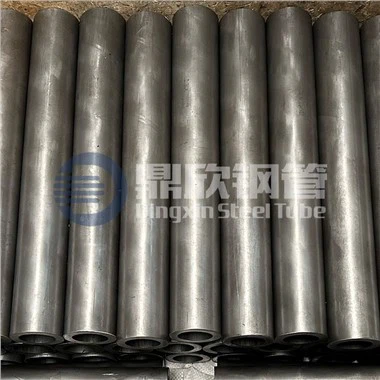
The rolling process is crucial for shaping the steel into various products and improving its mechanical properties. GB/T 1591 requires strict control of rolling temperature, rolling reduction, and rolling speed. Proper rolling temperature can ensure that the steel has the right phase structure and grain size, which in turn affects its strength and toughness. For example, in the production of thick - walled steel pipes JIS G3444 STK290 STK400 STK500 STK490 STK540 Seamless Carbon Steel Tube, precise control of the rolling process is necessary to ensure the wall thickness uniformity and dimensional accuracy of the pipes.
Heat treatment is another important step regulated by GB/T 1591. Different heat treatment processes, such as quenching, tempering, and normalizing, can be used to adjust the microstructure and mechanical properties of the steel. The standard specifies the appropriate heat treatment parameters for different grades of steel. For example, quenching can significantly increase the strength of the steel, while tempering can improve its toughness. By following the heat treatment requirements of GB/T 1591, manufacturers can precisely control the final properties of the products.
4. Quality Inspection and Certification
To ensure that products meet the requirements of GB/T 1591, comprehensive quality inspection and certification procedures are in place.
Before mass production, raw materials are inspected to ensure that their chemical composition and quality meet the standard. During the manufacturing process, in - process inspections are carried out at various stages. For example, in the rolling process, the thickness, width, and surface quality of the steel products are continuously monitored. Non - destructive testing methods, such as ultrasonic testing and magnetic particle testing, are used to detect internal and surface defects in the steel.
After production, a series of final tests are conducted. Chemical analysis is repeated to verify the chemical composition, and mechanical property tests are carried out to ensure that the yield strength, tensile strength, and other parameters meet the standard requirements. Only products that pass all these tests can obtain the relevant quality certifications, which are recognized by the market and customers.
5. Product Traceability
GB/T 1591 also emphasizes product traceability. Every product is marked with a unique identification code, which allows manufacturers to track the entire production process, from the raw materials to the final product. If a quality problem occurs, the manufacturer can quickly trace back the source of the problem, identify the production batch, and take appropriate corrective measures. This not only helps to ensure the quality of individual products but also improves the overall quality control system of the manufacturing process.
Conclusion
As a GB/T 1591 supplier, I can attest that this standard is a powerful tool for ensuring product quality. Through strict control of material composition, mechanical properties, manufacturing processes, and quality inspection, products adhering to GB/T 1591 deliver high - performance and reliable solutions across multiple industries. Whether it's for the construction of large - scale infrastructure projects or the manufacturing of precision mechanical parts, the quality assurance provided by GB/T 1591 is invaluable.
If you are in the market for high - quality low - alloy high - strength structural steel products that meet the GB/T 1591 standard, we welcome you to contact us for procurement and negotiation. We are committed to providing you with top - notch products and excellent service.
References
- National Bureau of Standards in China - GB/T 1591 Standard Document
- Research papers on low - alloy high - strength structural steel manufacturing technology
- Industry reports on the application and quality control of GB/T 1591 compliant products