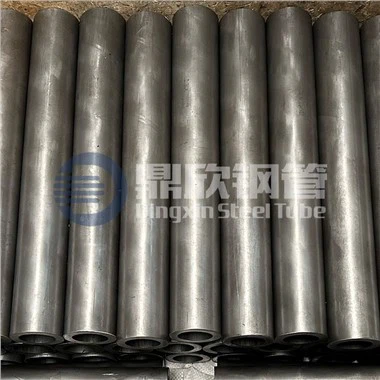
What is the nitriding process for AISI 4140 tube?
Hey there! I'm a supplier of AISI 4140 tubes, and today I want to chat about the nitriding process for these tubes. Nitriding is a pretty important heat treatment process that can really up the ante when it comes to the performance of AISI 4140 tubes.
First off, let's get to know what AISI 4140 is. AISI 4140 is a chromium - molybdenum alloy steel. It's known for its high strength, good toughness, and resistance to wear. It's used in a bunch of industries, like automotive, aerospace, and machinery manufacturing. Whether it's in axles, shafts, or other mechanical components, AISI 4140 tubes are quite popular.
Now, onto the nitriding process. Nitriding is a thermochemical treatment in which nitrogen atoms are diffused into the surface layer of the steel to form a hard nitride layer. There are a few different nitriding methods, but the most common ones for AISI 4140 tubes are gas nitriding and ion nitriding.
Gas Nitriding
Gas nitriding is a well - established process. In this method, the AISI 4140 tubes are placed in a sealed chamber filled with ammonia gas (NH₃). When heated to a specific temperature, usually around 500 - 550°C (932 - 1022°F), the ammonia decomposes into nitrogen and hydrogen. The nitrogen atoms then diffuse into the surface of the tubes.
The advantage of gas nitriding is that it can be used for large - scale production. It's a relatively simple process and can provide a uniform nitride layer. However, it has some drawbacks. For example, gas nitriding can take a long time, sometimes up to dozens of hours. Also, the control of the process parameters, like temperature and gas flow rate, is crucial. If not controlled properly, it can lead to uneven nitriding or the formation of brittle compounds on the surface.
Ion Nitriding
Ion nitriding, also known as plasma nitriding, is a more advanced technique. In ion nitriding, the AISI 4140 tubes are placed in a vacuum chamber. A gas mixture, typically nitrogen and hydrogen, is introduced into the chamber at low pressure. A high - voltage direct - current is applied to create a plasma. The nitrogen ions in the plasma are accelerated towards the surface of the tubes and penetrate into the material.
One of the big advantages of ion nitriding is that it's much faster compared to gas nitriding. The process can be completed in a shorter time, which can save a lot of production time and cost. It also allows for better control of the nitriding process. You can adjust the temperature, gas composition, and plasma parameters to get the desired nitride layer characteristics. On top of that, ion nitriding can produce a high - quality nitride layer with excellent wear resistance, corrosion resistance, and fatigue strength.
Benefits of Nitriding AISI 4140 Tubes
So, why bother nitriding AISI 4140 tubes? Well, there are several reasons.
Increased Hardness
The nitride layer formed on the surface of the tubes can significantly increase the hardness. This makes the tubes more resistant to wear and abrasion. For example, in automotive applications where the tubes are used in engine components, the increased hardness can improve the service life of these parts.
Improved Corrosion Resistance
Nitriding can also enhance the corrosion resistance of AISI 4140 tubes. The nitride layer acts as a protective barrier, preventing the base metal from coming into contact with corrosive substances. This is particularly important in marine or chemical environments where corrosion can be a big problem.
Enhanced Fatigue Strength
The nitriding process can improve the fatigue strength of the tubes. This means the tubes can withstand repeated loading and unloading cycles without cracking or failing prematurely. In applications like aerospace, where reliability is crucial, the enhanced fatigue strength is a major advantage.
Real - World Applications
The nitrided AISI 4140 tubes find their applications in various industries.
In the automotive industry, they are used in engine components such as camshafts, crankshafts, and transmission shafts. The improved wear resistance and fatigue strength make these components more reliable and durable.
In the aerospace industry, nitrided AISI 4140 tubes are used in structural parts, landing gear components, and hydraulic systems. The high - strength and corrosion - resistant properties of the nitrided tubes are essential for the safety and performance of aircraft.
In the machinery manufacturing industry, these tubes are used in tools and dies. The increased hardness and wear resistance of the nitrided tubes can improve the cutting performance and service life of tools.


Related Products
If you're interested in other types of tubes, we also supply some great options. For example, we have the SAE AISI 8620 Cold Drawn Seamless Steel Tube, which is suitable for many automotive applications. It offers good machinability and toughness.
Another product is the Cold Drawn Seamless Tube 20Cr 40Cr. These tubes are known for their high - strength and are widely used in mechanical engineering.
We also have the ASTM A519 SAE AISI 1010 1020 1026 1045 1541 4130 4140 Mechanical Tubing, which provides a range of options depending on your specific requirements.
Why Choose Our Tubes
As a supplier of AISI 4140 tubes, we pride ourselves on providing high - quality products. Our tubes go through strict quality control procedures to ensure they meet the highest standards. We also have a team of experts who can provide you with professional advice on nitriding and other heat treatment processes for the tubes.
If you're in the market for AISI 4140 tubes, whether nitrided or non - nitrided, or any of our other tube products, we'd love to talk to you. We're here to work out the best solution for your needs. So, don't hesitate to get in touch for a purchase negotiation.
References
ASM Handbook Volume 4: Heat Treating.
Metals Handbook Desk Edition, Third Edition.