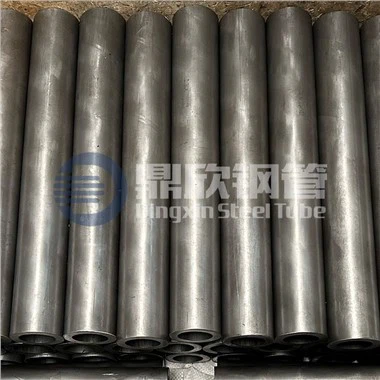
Hey there! As a supplier of ST35 BK, I've gotten a ton of questions about how this material performs at low temperatures. So, I thought I'd take some time to dig into this topic and share what I've learned.
First off, let's talk a bit about what ST35 BK is. It's a type of seamless steel tube that's used in a whole bunch of industries, like automotive and machinery. It's known for its good mechanical properties and is often used in applications where you need a reliable and durable tube.
Now, when it comes to low - temperature performance, there are a few key things to consider. One of the main factors is the impact of cold on the material's strength. At lower temperatures, metals generally become more brittle. This is because the atoms in the metal have less energy to move around, so they're less able to deform when a force is applied. For ST35 BK, this means that its ductility, or the ability to stretch without breaking, decreases as the temperature drops.
Let's look at some of the specific effects on mechanical properties. The yield strength of ST35 BK tends to increase at low temperatures. Yield strength is the point at which the material starts to deform permanently. So, at colder temperatures, it takes more force to get the tube to start deforming. However, this increase in yield strength comes at a cost. The ultimate tensile strength, which is the maximum amount of stress the material can withstand before breaking, doesn't increase as much as the yield strength. This creates a situation where the margin between the yield and ultimate tensile strength gets smaller. As a result, the tube is more likely to fracture suddenly once it reaches its yield point.
Another important aspect is the toughness of the material. Toughness is a measure of how much energy a material can absorb before fracturing. At low temperatures, the toughness of ST35 BK decreases significantly. This is a big deal because in real - world applications, tubes often have to withstand impacts and vibrations. If the tube is not tough enough at low temperatures, it can crack or break under these conditions.
The microstructure of ST35 BK also plays a role in its low - temperature performance. The steel has a specific grain structure, and at low temperatures, the movement of dislocations (defects in the crystal structure) is restricted. This restricts the material's ability to deform plastically, which again contributes to its increased brittleness.
In the automotive industry, for example, ST35 BK tubes might be used in components like fuel lines or brake lines. At low temperatures, the reduced ductility and toughness can pose a risk. If the vehicle is operating in a cold climate, the tubes need to be able to withstand the normal stresses of driving without cracking. A cracked fuel line or brake line can be extremely dangerous, so understanding the low - temperature performance of ST35 BK is crucial.
Now, let's compare ST35 BK with some other types of seamless tubes. For instance, the DIN2391 ST52 BK Seamless Tube has different alloying elements and a different microstructure. These differences can lead to different low - temperature performance characteristics. ST52 BK might have better toughness at low temperatures compared to ST35 BK, which could make it a better choice for applications in extremely cold environments.
The 1026 Seamless Tubing is another option. It has its own unique set of properties. Depending on the specific composition and heat treatment, 1026 seamless tubing might perform differently at low temperatures. Some versions of 1026 tubing could have a more favorable balance between strength and ductility at cold temperatures compared to ST35 BK.


The Cold Drawn Seamless Tube 20Cr 40Cr also has distinct features. The addition of chromium in these tubes can improve their hardenability and corrosion resistance. At low temperatures, the chromium can also have an impact on the material's mechanical properties. It might help to maintain a certain level of toughness, which could be an advantage in cold - weather applications.
If you're in an industry that requires the use of seamless tubes in low - temperature conditions, it's important to carefully evaluate the performance of ST35 BK and compare it with other options. You need to consider factors like the specific temperature range, the type of stresses the tube will be subjected to, and the safety requirements of your application.
As a supplier, I can help you figure out if ST35 BK is the right choice for your needs. Whether you're working on an automotive project or a machinery application, I've got the knowledge and experience to guide you. We can discuss your requirements in detail and see if ST35 BK or another type of seamless tube would be more suitable.
If you're interested in learning more or want to start a procurement discussion, don't hesitate to reach out. I'm here to help you make the best decision for your business. We can talk about pricing, lead times, and any other concerns you might have.
In conclusion, the performance of ST35 BK at low temperatures is complex. Its strength and brittleness change in ways that can have significant implications for its use in various applications. By understanding these changes and comparing it with other seamless tubes, you can make an informed decision about which material is right for you. So, if you've got questions or are ready to start a project, let's get in touch and start talking about how we can work together.
References
- Metals Handbook: Properties and Selection - Irons and Steels, ASM International
- Engineering Materials 1: An Introduction to Properties, Applications, and Design, Michael F. Ashby and David R. H. Jones