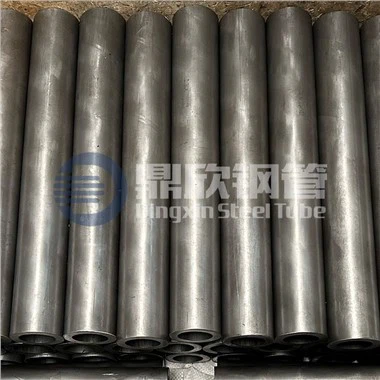
As a supplier of 4130 tubing, I often get asked about the impact resistance of this remarkable material. In this blog post, I'll delve into the intricacies of 4130 tubing's impact resistance, exploring its composition, properties, and real - world applications.
Composition of 4130 Tubing
4130 steel is a low - alloy steel, and the "41" in its name indicates that it is a chromium - molybdenum steel. The "30" represents the approximate carbon content of 0.30%. This combination of elements gives 4130 tubing unique properties that contribute to its excellent impact resistance. Chromium enhances the hardenability and corrosion resistance of the steel, while molybdenum improves its strength, toughness, and resistance to wear. The carbon content provides the necessary hardness for the tubing to withstand mechanical stress.

Factors Affecting Impact Resistance
Heat Treatment
One of the most significant factors influencing the impact resistance of 4130 tubing is heat treatment. Proper heat treatment can transform the microstructure of the steel, improving its toughness and ductility. For example, normalizing and tempering can refine the grain structure of the tubing, reducing the risk of brittle fracture under impact. When 4130 tubing is quenched and tempered, it can achieve a good balance between hardness and toughness, which is crucial for high - impact applications.
Tubing Geometry
The geometry of the 4130 tubing also plays a vital role in its impact resistance. The wall thickness, diameter, and shape of the tubing can affect how it distributes and absorbs impact energy. Tubing with a thicker wall can generally withstand higher impact forces compared to thinner - walled tubing. Additionally, the cross - sectional shape, such as round, square, or rectangular, can influence the stress distribution within the tubing under impact.
Strain Rate
The rate at which an impact occurs, known as the strain rate, can have a profound effect on the impact resistance of 4130 tubing. At high strain rates, the material may behave differently compared to low - strain - rate conditions. In high - speed impact scenarios, the tubing may experience dynamic loading, which can lead to different failure modes. 4130 tubing is known for its ability to maintain relatively good impact resistance even at high strain rates, making it suitable for applications where sudden impacts are common.
Measuring Impact Resistance
To quantify the impact resistance of 4130 tubing, several testing methods are commonly used. One of the most well - known tests is the Charpy impact test. In this test, a notched specimen of the tubing is struck by a pendulum, and the energy absorbed during the fracture is measured. A higher energy absorption value indicates better impact resistance. Another test is the Izod impact test, which is similar to the Charpy test but uses a different specimen configuration. These tests provide valuable data on the material's ability to withstand sudden impacts.
Real - World Applications
Automotive Industry
In the automotive industry, 4130 tubing is widely used due to its excellent impact resistance. It can be found in roll cages, suspension components, and chassis parts. Roll cages are designed to protect the occupants of a vehicle in the event of a crash. The high impact resistance of 4130 tubing ensures that the roll cage can absorb and dissipate the energy from the impact, reducing the risk of injury. Suspension components made from 4130 tubing can withstand the dynamic loads and impacts encountered during normal driving and off - road use. For those interested in other automotive tubes, you can check out our [Motorcycle Front Fork Tube SAE 1536 1541]( /automotive - tube/motorcycle - front - fork - tube - sae - 1536 - 1541.html) and [Cold Drawn Seamless Tube 20Cr 40Cr]( /automotive - tube/cold - drawn - seamless - tube - 20cr - 40cr.html).
Aerospace Industry
The aerospace industry also relies on 4130 tubing for its impact - resistant properties. It is used in aircraft frames, landing gear components, and engine mounts. In an aerospace environment, components need to withstand high - energy impacts during takeoff, landing, and flight. 4130 tubing's ability to resist impact helps ensure the safety and reliability of aircraft structures.
Manufacturing and Machinery
In manufacturing and machinery, 4130 tubing is used in a variety of applications where impact resistance is essential. It can be found in conveyor systems, material handling equipment, and industrial tooling. For example, in a conveyor system, the tubing may be used as support structures that need to withstand the impact of moving materials.
Comparison with Other Tubing Materials
When compared to other tubing materials, 4130 tubing often stands out for its impact resistance. For instance, compared to mild steel tubing, 4130 tubing has a higher strength - to - weight ratio and better toughness, which translates to superior impact performance. Another popular material is stainless steel tubing. While stainless steel offers excellent corrosion resistance, 4130 tubing can provide better impact resistance in many cases, especially when properly heat - treated. Our [SAE AISI 8620 Cold Drawn Seamless Steel Tube]( /automotive - tube/sae - aisi - 8620 - cold - drawn - seamless - steel - tube.html) also has its own unique properties, but 4130 tubing is a top choice for applications where impact resistance is a primary concern.
Conclusion
In conclusion, the impact resistance of 4130 tubing is a result of its unique composition, heat treatment, and geometric design. Its ability to withstand sudden impacts makes it a versatile material in various industries, including automotive, aerospace, and manufacturing. Whether you are designing a high - performance vehicle, an aircraft component, or an industrial machine, 4130 tubing can provide the reliability and safety you need.
If you are interested in purchasing 4130 tubing or have any questions about its impact resistance and suitability for your application, please feel free to contact us for a detailed discussion. Our team of experts is ready to assist you in finding the best tubing solution for your specific needs.
References
- ASM Handbook Volume 1: Properties and Selection: Irons, Steels, and High - Performance Alloys.
- Metals Handbook Desk Edition, Third Edition.
- "Mechanical Behavior of Materials" by Norman E. Dowling.