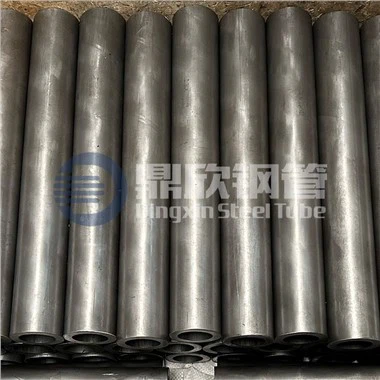
As a trusted supplier of ST35 NBK products, I understand the critical importance of accurately inspecting the chemical composition of this material. ST35 NBK is a type of seamless steel tube that is widely used in various industries due to its excellent mechanical properties and corrosion resistance. Ensuring the correct chemical composition is essential for guaranteeing the quality and performance of the final products. In this blog post, I will share some effective methods for inspecting the chemical composition of ST35 NBK.
Why Inspect the Chemical Composition?
Before delving into the inspection methods, it's crucial to understand why inspecting the chemical composition is necessary. The chemical composition of ST35 NBK directly influences its physical and mechanical properties. For example, the carbon content affects the hardness and strength of the steel, while the presence of other elements such as manganese, silicon, and sulfur can impact its weldability, ductility, and corrosion resistance. By accurately determining the chemical composition, manufacturers can ensure that the ST35 NBK meets the required standards and specifications for its intended application.


Methods for Inspecting Chemical Composition
1. Spectroscopic Analysis
Spectroscopic analysis is one of the most commonly used methods for determining the chemical composition of metals. There are several types of spectroscopic techniques available, including optical emission spectroscopy (OES) and X-ray fluorescence (XRF).
- Optical Emission Spectroscopy (OES): OES works by exciting the atoms in the sample using an electrical spark or an arc. When the excited atoms return to their ground state, they emit light at specific wavelengths that are characteristic of the elements present in the sample. By analyzing the emitted light, the concentration of each element can be determined. OES is a highly accurate and reliable method that can detect a wide range of elements with high sensitivity. It is commonly used in industrial settings for quality control and material identification.
- X-ray Fluorescence (XRF): XRF is a non-destructive method that uses X-rays to excite the atoms in the sample. When the atoms are excited, they emit secondary X-rays, or fluorescence, at specific energies that are characteristic of the elements present. By measuring the energy and intensity of the fluorescence, the chemical composition of the sample can be determined. XRF is a fast and convenient method that can be used for both qualitative and quantitative analysis. It is often used for on-site inspections and in-field applications.
2. Chemical Analysis
Chemical analysis involves the use of chemical reagents to react with the sample and determine the concentration of specific elements. There are several chemical analysis methods available, including wet chemical analysis and instrumental chemical analysis.
- Wet Chemical Analysis: Wet chemical analysis is a traditional method that involves dissolving the sample in a suitable solvent and then using chemical reactions to determine the concentration of specific elements. This method is highly accurate and can provide precise results for a wide range of elements. However, it is time-consuming and requires skilled technicians to perform the analysis.
- Instrumental Chemical Analysis: Instrumental chemical analysis involves the use of instruments such as atomic absorption spectroscopy (AAS) and inductively coupled plasma mass spectrometry (ICP-MS) to determine the concentration of elements in the sample. These methods are highly sensitive and can detect trace amounts of elements with high accuracy. They are commonly used in research laboratories and for high-precision analysis.
3. Microscopic Analysis
Microscopic analysis can also be used to inspect the chemical composition of ST35 NBK. By examining the microstructure of the steel, it is possible to identify the presence of different phases and the distribution of elements within the material.
- Scanning Electron Microscopy (SEM): SEM uses a focused beam of electrons to scan the surface of the sample and generate high-resolution images. By using energy-dispersive X-ray spectroscopy (EDS) in conjunction with SEM, it is possible to analyze the chemical composition of specific areas of the sample. SEM-EDS is a powerful tool for studying the microstructure and chemical composition of metals at the microscale.
- Transmission Electron Microscopy (TEM): TEM uses a beam of electrons to pass through a thin section of the sample and generate an image. TEM can provide high-resolution images of the microstructure and can also be used for elemental analysis using energy-filtered TEM (EFTEM) or electron energy loss spectroscopy (EELS). TEM is a more advanced and expensive technique than SEM but can provide more detailed information about the chemical composition and microstructure of the sample.
Importance of Quality Control
As a supplier of ST35 NBK, I am committed to providing high-quality products that meet the strictest standards and specifications. Quality control is an essential part of our manufacturing process, and we use a combination of the methods described above to ensure that our ST35 NBK products have the correct chemical composition. By conducting regular inspections and tests, we can identify any potential issues early on and take corrective action to ensure that the final products meet the required quality standards.
In addition to inspecting the chemical composition, we also perform other quality control tests on our ST35 NBK products, such as mechanical testing, dimensional inspection, and surface finish inspection. These tests help us to ensure that the products have the required mechanical properties, dimensions, and surface quality for their intended application.
Conclusion
Inspecting the chemical composition of ST35 NBK is a critical step in ensuring the quality and performance of the final products. By using a combination of spectroscopic analysis, chemical analysis, and microscopic analysis, manufacturers can accurately determine the chemical composition of the steel and ensure that it meets the required standards and specifications. As a supplier of ST35 NBK, I am committed to providing high-quality products that are backed by rigorous quality control measures. If you are interested in purchasing ST35 NBK products or have any questions about our inspection methods, please feel free to [contact us for procurement discussions]. We look forward to working with you to meet your needs.
References
- ASM Handbook, Volume 3: Alloy Phase Diagrams, ASM International, 1992.
- Metals Handbook: Properties and Selection: Irons, Steels, and High-Performance Alloys, ASM International, 1990.
- ASTM International Standards for Steel Products.