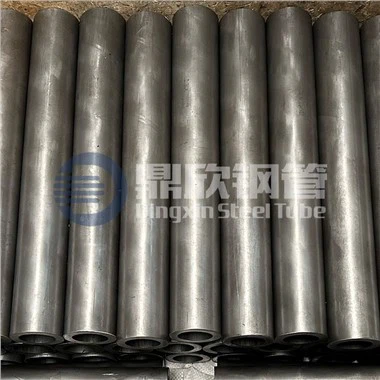
Hey there! If you're in the market for 4140 tubing or just curious about its wall thickness, you've landed in the right place. I'm part of a 4140 tubing supply team, and I'm here to break down everything about that crucial wall thickness factor for you.
Let's start by understanding what 4140 tubing is. It's a type of alloy steel tubing widely used in various industries. 4140 steel is known for its high strength, good toughness, and great wear resistance. This makes it perfect for applications where a combination of these properties is required, like in the automotive, aerospace, and machinery sectors.
Now, let's talk about the wall thickness. The wall thickness of 4140 tubing isn't a one - size - fits - all deal. It can vary based on a bunch of factors. First off, the intended application plays a huge role. If the tubing is going to be used in a high - pressure environment, like in hydraulic systems, a thicker wall is usually needed. This is because a thicker wall can better withstand the internal pressure without bursting or deforming.
On the other hand, if the tubing is used in a less demanding application, such as a simple structural support in a non - high - stress environment, a thinner wall might do the trick. This can save on material costs and also reduce the overall weight of the structure.
The manufacturing process also affects the wall thickness. There are two main ways to produce 4140 tubing: seamless and welded. Seamless tubing generally has more uniform wall thickness compared to welded tubing. In the seamless process, the steel is formed into a tube shape without a weld seam, which allows for a more consistent wall around the circumference of the tube. Welded tubing, however, has a weld seam that can sometimes cause slight variations in the wall thickness near the seam.
When it comes to standard wall thicknesses, there are a few common ones in the market. For smaller diameter 4140 tubing, say with an outer diameter of around 1 inch, you might commonly find wall thicknesses ranging from around 0.035 inches to 0.125 inches. As the outer diameter increases, the wall thickness usually increases as well to maintain the necessary strength and structural integrity. For example, for a 4 - inch outer diameter tube, the wall thickness could vary from 0.156 inches up to 0.5 inches or more, depending on the exact requirements.
It's important to note that the wall thickness you choose can significantly impact the performance of the tubing. A wall that's too thin may not be able to handle the load or stress it's subjected to, leading to failure. For instance, in an automotive application where the tubing is part of the exhaust system, a thin - walled tube might not be able to withstand the heat and vibration over time, resulting in cracks or leaks.
On the flip side, a wall that's too thick can be overkill and lead to unnecessary costs. It adds extra weight to the component, which can be a problem in applications where weight is a concern, like in aerospace. So, it's all about finding that sweet spot.
Now, in our supply business, we offer a wide range of 4140 tubing with different wall thicknesses to meet various customer needs. Whether you're working on a small DIY project or a large - scale industrial application, we've got options. We also have experts on our team who can help you determine the right wall thickness for your specific situation. They can take into account factors like the load, pressure, temperature, and the environment in which the tubing will be used.
If you're looking for other tubing options in addition to 4140, we also supply 1026 Seamless Tubing which is a great choice for many general - purpose applications due to its relatively low cost and decent mechanical properties. And if you need something that meets specific Japanese Industrial Standards, we have JIS G3444 STK290 STK400 STK500 STK490 STK540 Seamless Carbon Steel Tube. For those who prefer cold - drawn seamless options in different carbon steel grades, we offer Cold Drawn Seamless Carbon Steel Tube 10# 20# 35# 45# 55#.
When it comes to getting the right 4140 tubing for your project, we're here to make the process as easy as possible. We can provide samples so you can test the tubing in your application before making a large - scale purchase. Our delivery times are also pretty competitive, ensuring that you get your tubing when you need it.
If you're interested in reaching out to discuss your 4140 tubing requirements, whether it's about the wall thickness, quantity, or any other aspect, don't hesitate. We're always happy to have a chat and see how we can help you out with your tubing needs. You can come to us with your detailed project specifications, and we'll work together to find the best solution.
In conclusion, the wall thickness of 4140 tubing is a critical factor that depends on multiple elements, including the application, manufacturing process, and performance requirements. By choosing the right wall thickness, you can ensure the optimal performance of your tubing in your project. And remember, we're your go - to source for all types of high - quality tubing products.
References


- "Alloy Steel Handbook": A comprehensive guide on the properties and uses of different alloy steels, including 4140.
- "Tubing Manufacturing Technologies": A technical publication that delves into the various methods of producing tubing and how they affect wall thickness.
- "Industry Standards for Tubing in Automotive and Aerospace Applications": A collection of specifications and guidelines for tubing used in these specific industries.