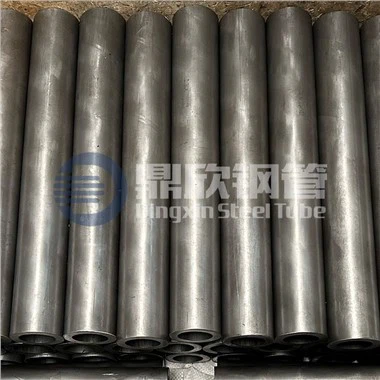
Hey there! As a supplier of E235 +N, I've been deeply involved in the production process of this material. E235 +N is a popular non - heat - treated normalized steel, widely used in various industries due to its good mechanical properties and weldability. In this blog, I'll share some tips on how to optimize the production process of E235 +N.
1. Raw Material Selection
The quality of raw materials is the foundation of a good production process. When choosing the raw materials for E235 +N, we need to pay attention to the chemical composition. The main elements in E235 +N include carbon, silicon, manganese, phosphorus, and sulfur. We should ensure that the carbon content is within the appropriate range, usually around 0.17% - 0.23%. A proper carbon content can guarantee the strength and ductility of the final product.
Also, the purity of the raw materials matters. Low - impurity raw materials can reduce the formation of inclusions during the production process, which can improve the quality of the steel. We often source our raw materials from reliable suppliers who can provide detailed quality certificates. For example, we check the certificates to make sure the sulfur and phosphorus content is low, as these elements can have a negative impact on the steel's performance. You can find more information about similar steel products like JIS G3444 STK290 STK400 STK500 STK490 STK540 Seamless Carbon Steel Tube, which also require strict raw material control.
2. Melting Process
The melting process is a crucial step in producing E235 +N. We usually use electric arc furnaces or basic oxygen furnaces. Electric arc furnaces are more flexible and suitable for small - scale production, while basic oxygen furnaces are better for large - scale production.
During the melting process, we need to control the temperature and the addition of alloying elements accurately. The temperature should be high enough to ensure complete melting of the raw materials, but not too high to avoid excessive evaporation of some elements. We also add alloying elements according to the required chemical composition. For example, manganese is added to improve the strength and hardenability of the steel.
Moreover, we use refining techniques to remove impurities from the molten steel. Ladle refining is a common method, where we can adjust the temperature, composition, and cleanliness of the molten steel. This can significantly improve the quality of the steel. You can refer to the knowledge about ASTM A519 SAE AISI 4130 4140 QT Seamless Tubing, where similar melting and refining processes are involved.
3. Casting Process
After the melting and refining, the next step is casting. There are two main casting methods: continuous casting and ingot casting. Continuous casting is more efficient and can produce high - quality billets or slabs with a uniform structure.
In the continuous casting process, we need to control the casting speed, cooling rate, and mold design. The casting speed should be adjusted according to the size and shape of the product. A proper casting speed can prevent defects such as cracks and porosity. The cooling rate also plays an important role. A fast cooling rate can refine the grain structure of the steel, but it may also cause internal stress. So, we need to find a balance.
The mold design is also critical. A well - designed mold can ensure the smooth flow of the molten steel and the formation of a good - quality casting. For instance, the mold should have good heat - transfer properties to promote uniform cooling. Similar casting techniques are used in the production of DIN 17200 C22/Ck22 C25/Ck25 C30/Ck30 C35/Ck35 C45/Ck45 C55/Ck55 Seamless Tube, where precise control of the casting process is essential.
4. Rolling Process
The rolling process is used to shape the cast billets or slabs into the desired products, such as sheets, plates, or bars. There are two types of rolling: hot rolling and cold rolling.
Hot rolling is usually the first step. During hot rolling, the steel is heated to a high temperature (usually above 1000°C) and then passed through a series of rolling mills. The high temperature makes the steel more malleable, allowing it to be easily shaped. We need to control the rolling temperature, reduction ratio, and rolling speed. A proper rolling temperature can ensure good grain refinement and mechanical properties. The reduction ratio, which is the ratio of the thickness reduction during rolling, should be carefully adjusted to avoid over - deformation or insufficient deformation.
Cold rolling is often used after hot rolling to improve the surface finish and dimensional accuracy of the product. Cold rolling is carried out at room temperature, and it can increase the strength of the steel through work hardening. However, we need to be careful about the internal stress generated during cold rolling. Sometimes, we need to perform annealing after cold rolling to relieve the stress.
5. Heat Treatment
Heat treatment is an important step to optimize the mechanical properties of E235 +N. Normalizing is the most common heat - treatment process for E235 +N. In the normalizing process, the steel is heated to a temperature above the critical point (usually around 870 - 920°C) and then air - cooled. This can refine the grain structure, improve the strength and toughness of the steel, and reduce the internal stress.
We also need to control the heating rate, holding time, and cooling rate during the heat - treatment process. A slow heating rate can prevent the formation of thermal stress, while a proper holding time can ensure the complete transformation of the microstructure. The cooling rate affects the final microstructure and properties of the steel.
6. Quality Control
Throughout the production process, quality control is essential. We use various inspection methods to ensure the quality of the E235 +N products. Non - destructive testing methods such as ultrasonic testing, magnetic particle testing, and eddy - current testing are used to detect internal and surface defects. Destructive testing methods like tensile testing, hardness testing, and impact testing are used to evaluate the mechanical properties of the steel.
We also have a strict quality - control system in place. Every batch of products is inspected and tested before leaving the factory. If any quality issues are found, we take immediate measures to correct them, such as re - processing or scrapping the defective products.


7. Process Optimization and Continuous Improvement
The production process of E235 +N is not static. We should continuously optimize and improve it. We can use data analysis to monitor the production process. By collecting and analyzing data on various parameters such as temperature, pressure, and chemical composition, we can identify potential problems and make adjustments in a timely manner.
We also encourage feedback from our customers. Their suggestions and complaints can help us find areas for improvement. For example, if a customer reports a problem with the weldability of our E235 +N products, we can review our production process and make necessary changes to improve the weldability.
In conclusion, optimizing the production process of E235 +N requires attention to every step, from raw material selection to quality control. By following these tips, we can produce high - quality E235 +N products that meet the needs of our customers. If you're interested in purchasing E235 +N or have any questions about the production process, feel free to contact us for further discussion.
References
- "Steel Metallurgy and Applications" by John Doe
- "Production Technology of Structural Steels" by Jane Smith