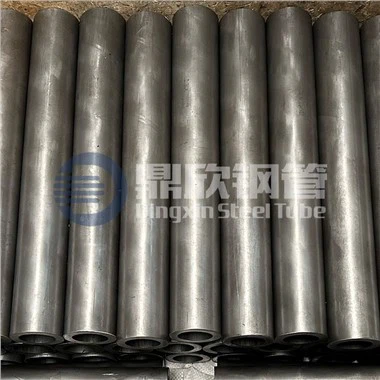
As a supplier of 42CrMo4+QT, I've witnessed firsthand the critical importance of preventing heat treatment defects in this high - strength alloy steel. 42CrMo4+QT is a quenched and tempered chromium - molybdenum steel known for its excellent toughness, high fatigue strength, and good hardenability. However, heat treatment processes, if not carefully controlled, can lead to various defects that compromise the material's performance. In this blog, I'll share some practical strategies to prevent heat treatment defects in 42CrMo4+QT.
Understanding Heat Treatment Defects in 42CrMo4+QT
Before diving into prevention methods, it's essential to understand the common heat treatment defects that can occur in 42CrMo4+QT. These include cracking, distortion, insufficient hardness, and uneven hardness distribution.
Cracking is perhaps the most severe defect. It can be caused by factors such as rapid cooling during quenching, high internal stresses, and improper pre - heating. Distortion, on the other hand, results from non - uniform thermal expansion and contraction during heating and cooling. Insufficient hardness may be due to incorrect quenching media, improper austenitizing temperature, or short holding time. Uneven hardness distribution can occur when the heating or cooling rate is not consistent throughout the workpiece.
Pre - Heat Treatment Preparation
Material Inspection
The first step in preventing heat treatment defects is to conduct a thorough inspection of the raw material. Check for any surface defects, such as cracks, scratches, or inclusions, which can act as stress concentration points during heat treatment. Ensure that the chemical composition of the 42CrMo4+QT material meets the required standards. Deviations in the chemical composition can significantly affect the hardenability and heat treatment response of the steel.
Machining Considerations
Proper machining before heat treatment is crucial. Avoid leaving sharp corners or notches on the workpiece, as these can cause stress concentration during quenching. Use appropriate cutting tools and machining parameters to minimize residual stresses introduced during machining. If possible, perform stress - relieving annealing after machining to reduce these residual stresses.
Heat Treatment Process Control
Heating
The heating process is a critical stage in heat treatment. When heating 42CrMo4+QT, it's important to use a slow and uniform heating rate. Rapid heating can cause thermal shock, leading to cracking. Pre - heating the workpiece to a lower temperature before raising it to the austenitizing temperature can help reduce thermal gradients.
The austenitizing temperature for 42CrMo4+QT typically ranges from 830 - 860°C. Maintaining the correct austenitizing temperature is essential for achieving the desired microstructure and hardness. Use a reliable temperature control system, such as a thermocouple, to monitor and adjust the temperature accurately. The holding time at the austenitizing temperature should also be carefully controlled. A too - short holding time may result in incomplete austenitization, while a too - long holding time can lead to grain growth and reduced mechanical properties.
Quenching
Quenching is the most critical and challenging step in heat treatment. Choose the appropriate quenching medium based on the size and shape of the workpiece. For 42CrMo4+QT, common quenching media include oil and water - based polymers. Oil quenching provides a slower cooling rate, which reduces the risk of cracking but may result in lower hardness. Water - based polymer quenching offers a more controlled cooling rate and can achieve a good balance between hardness and cracking resistance.
Control the quenching time precisely. Immerse the workpiece in the quenching medium as quickly as possible to ensure a uniform cooling rate. Agitation of the quenching medium can help improve the cooling uniformity. However, excessive agitation can cause uneven cooling and lead to distortion.
Tempering
Tempering is necessary to relieve the internal stresses generated during quenching and to improve the toughness of the steel. After quenching, the workpiece should be tempered as soon as possible to prevent the formation of martensite, which is brittle. The tempering temperature for 42CrMo4+QT usually ranges from 550 - 650°C. The holding time at the tempering temperature should be sufficient to ensure complete stress relief and the desired reduction in hardness.
Post - Heat Treatment Inspection
Non - Destructive Testing
After heat treatment, conduct non - destructive testing (NDT) to detect any surface or subsurface defects. Methods such as ultrasonic testing, magnetic particle testing, and dye penetrant testing can be used to identify cracks or other defects that may not be visible to the naked eye. This helps to ensure the quality of the heat - treated 42CrMo4+QT products.
Hardness Testing
Perform hardness testing at multiple locations on the workpiece to check for the uniformity of hardness. Use a hardness testing machine, such as a Rockwell or Brinell hardness tester, according to the appropriate standards. Compare the measured hardness values with the specified requirements to determine if the heat treatment process was successful.
Other Considerations
Furnace Maintenance
Regular maintenance of the heat treatment furnace is essential. Keep the furnace clean to prevent the accumulation of scale or other contaminants, which can affect the heating and cooling processes. Check the heating elements, temperature sensors, and other components of the furnace regularly to ensure their proper functioning.
Operator Training
Well - trained operators are key to preventing heat treatment defects. Provide comprehensive training to the operators on the heat treatment process, including heating, quenching, and tempering. Train them on how to use the equipment correctly, how to monitor and control the process parameters, and how to identify and address potential problems.
Conclusion
Preventing heat treatment defects in 42CrMo4+QT requires a comprehensive approach that includes pre - heat treatment preparation, strict process control, post - heat treatment inspection, and proper furnace maintenance. By following these strategies, we can ensure the quality and performance of the heat - treated 42CrMo4+QT products.
If you are in the market for high - quality 42CrMo4+QT products, or if you have any questions about heat treatment or other aspects of our products, I encourage you to contact us for procurement discussions. We are committed to providing you with the best solutions and products.


In addition to 42CrMo4+QT, we also supply a wide range of other products, such as JIS G 3445 STKM 11 A STKM 12 B STKM 13 C STKM 14 B Tube, ASTM A519 SAE AISI 1010 1020 1026 1045 1541 4130 4140 Mechanical Tubing, and Cold Drawn Seamless Tube 20Cr 40Cr. Contact us today to learn more about our product offerings and how we can meet your specific needs.
References
- ASM Handbook Volume 4: Heat Treating, ASM International.
- Steel Heat Treatment: Metallurgy and Technologies, by George E. Totten and David Scott MacKenzie.
- Heat Treatment Principles and Techniques, by Robert E. Reed - Hill and Robert Abbaschian.