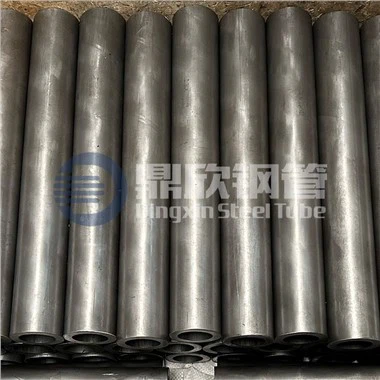
Hey there! As a supplier of GB/T 3077 alloy structural steels, I often get asked about the requirements for the bending strength of these steels. So, I thought I'd write this blog to share some insights on this topic.
First off, let's understand what GB/T 3077 alloy structural steels are. These steels are widely used in various industries because of their excellent mechanical properties. They are designed to meet specific standards set by the Chinese National Standard (GB/T), which ensures their quality and performance.
The bending strength of GB/T 3077 alloy structural steels is a crucial property. It determines how well the steel can withstand bending forces without breaking or deforming permanently. There are several factors that influence the bending strength of these steels.
Chemical Composition
The chemical composition of GB/T 3077 alloy structural steels plays a significant role in determining their bending strength. Elements like carbon (C), manganese (Mn), silicon (Si), chromium (Cr), and nickel (Ni) are commonly found in these steels. Carbon, for example, increases the hardness and strength of the steel. But too much carbon can make the steel brittle, which is not good for bending. Manganese helps to improve the hardenability and strength of the steel, while silicon enhances its strength and toughness. Chromium and nickel are added to improve corrosion resistance and also contribute to the overall strength of the steel.
Heat Treatment
Heat treatment is another important factor. Processes like quenching and tempering can significantly improve the bending strength of GB/T 3077 alloy structural steels. Quenching involves rapidly cooling the steel from a high temperature, which forms a hard martensitic structure. Tempering is then done to reduce the brittleness of the quenched steel and improve its toughness. By carefully controlling the heat treatment parameters, we can achieve the desired balance between strength and toughness, which is essential for good bending strength.
Grain Size
The grain size of the steel also affects its bending strength. A finer grain size generally leads to higher strength and better ductility. During the manufacturing process, we can control the grain size through processes like hot rolling and heat treatment. For example, hot rolling at the right temperature and with the right reduction ratio can help to refine the grain size of the steel, thus improving its bending strength.
Standards and Requirements
GB/T 3077 has specific standards for the mechanical properties of these alloy structural steels, including bending strength. These standards are based on extensive research and testing to ensure that the steels meet the requirements of different applications. The bending strength requirements can vary depending on the grade of the steel and its intended use. For example, steels used in high - stress applications like automotive parts or construction structures may have higher bending strength requirements compared to those used in less demanding applications.


Testing the Bending Strength
To determine if the GB/T 3077 alloy structural steels meet the bending strength requirements, we use various testing methods. One common method is the three - point bending test. In this test, a steel specimen is placed on two supports and a load is applied at the center. The load is gradually increased until the specimen starts to bend or break. The maximum load that the specimen can withstand before failure is used to calculate the bending strength.
Applications and Bending Strength
GB/T 3077 alloy structural steels are used in a wide range of applications. For instance, in the automotive industry, they are used to make parts like Motorcycle Front Fork Tube SAE 1536 1541. These parts need to have good bending strength to withstand the forces during riding. In the construction industry, they are used for beams and columns, where high bending strength is essential to ensure the stability of the structure.
Another application is in the manufacturing of seamless tubing, such as 1026 Seamless Tubing. These tubes may be subjected to bending forces during installation or use, so they need to have adequate bending strength. And EN 10305 - 1 E215 E235 E355 +C+SR+A+N Cold Drawn Seamless Tube is also a product where the bending strength is a critical factor.
Our Commitment as a Supplier
As a supplier of GB/T 3077 alloy structural steels, we are committed to providing high - quality products that meet the bending strength requirements. We have strict quality control measures in place throughout the manufacturing process. Our team of experts ensures that the chemical composition, heat treatment, and other factors are carefully controlled to achieve the desired bending strength. We also conduct regular testing to ensure that our products meet the standards.
If you're in the market for GB/T 3077 alloy structural steels, you can be confident that our products will meet your needs. Whether you need steel for automotive applications, construction, or any other industry, we have the right products for you. We're always here to answer your questions and help you choose the best steel for your specific requirements.
If you're interested in purchasing our GB/T 3077 alloy structural steels, feel free to reach out to us for a detailed discussion. We can provide you with samples, technical specifications, and pricing information. Let's work together to find the perfect solution for your project.
References
- Chinese National Standard GB/T 3077 - Alloy Structural Steels
- Materials Science and Engineering textbooks on alloy steels
- Industry research reports on the application of GB/T 3077 alloy structural steels