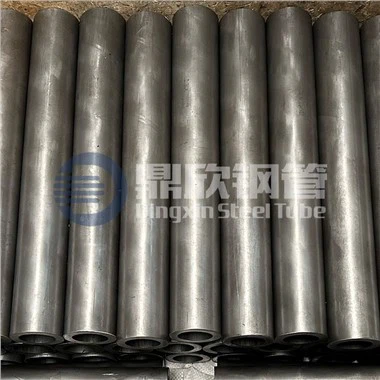
In the oil and gas industry, casing tubes and liner tubes play crucial roles in well construction, yet they have distinct characteristics and functions. As a seasoned casing tube supplier, I've witnessed firsthand the importance of understanding these differences to ensure the success of drilling operations. In this blog post, I'll delve into the disparities between casing tubes and liner tubes, shedding light on their unique features and applications.
Definition and Basic Function
Let's start with the fundamentals. A casing tube is a large-diameter pipe that is inserted into a wellbore and cemented in place. Its primary function is to provide structural integrity to the well, prevent the collapse of the wellbore walls, and isolate different geological formations. Casing tubes also protect groundwater from contamination by preventing the migration of fluids and gases between different layers of the earth.
On the other hand, a liner tube is a smaller-diameter pipe that is hung inside the casing tube and extends from a certain depth to the bottom of the well. Liners are typically used to isolate specific zones within the well, such as a productive reservoir or a troublesome formation. They can also be used to repair damaged casing or to reduce the overall cost of well construction by using a shorter length of casing.
Design and Construction
One of the key differences between casing tubes and liner tubes lies in their design and construction. Casing tubes are usually made of high-strength steel and are available in various sizes and grades to suit different well conditions. They are typically welded or seamless and are designed to withstand high pressures and temperatures.
Liners, on the other hand, are often made of a combination of steel and other materials, such as fiberglass or carbon fiber, to provide additional strength and corrosion resistance. They are typically hung from a liner hanger, which is a device that attaches the liner to the casing tube and provides support for the weight of the liner.
Installation Process
The installation process for casing tubes and liner tubes also differs significantly. Casing tubes are typically installed in multiple stages, starting with the surface casing, which is the first casing string to be installed and extends from the surface to a shallow depth. The surface casing is followed by intermediate casing strings, which are installed at various depths to provide additional support and isolation. Finally, the production casing is installed, which extends from the surface to the productive reservoir and is used to produce oil or gas.


Liners, on the other hand, are typically installed after the casing has been cemented in place. The liner is lowered into the wellbore using a liner running tool, which is a device that attaches to the top of the liner and allows it to be lowered into the well. Once the liner is in place, it is cemented to the casing tube to provide a seal and prevent the migration of fluids and gases.
Cost and Efficiency
Another important factor to consider when choosing between casing tubes and liner tubes is cost and efficiency. Casing tubes are generally more expensive than liner tubes due to their larger size and higher strength requirements. However, they provide greater structural integrity and isolation, which can help to reduce the risk of wellbore instability and improve the overall efficiency of the well.
Liners, on the other hand, are typically less expensive than casing tubes and can be used to reduce the overall cost of well construction. They are also more flexible and can be installed in a shorter time frame, which can help to reduce downtime and increase the productivity of the well.
Applications
The applications of casing tubes and liner tubes also vary depending on the specific needs of the well. Casing tubes are typically used in all types of wells, including oil and gas wells, geothermal wells, and water wells. They are used to provide structural support, isolate different geological formations, and protect groundwater from contamination.
Liners, on the other hand, are typically used in specific applications, such as to isolate a productive reservoir, repair damaged casing, or reduce the overall cost of well construction. They are also commonly used in horizontal wells, where they can provide additional support and isolation in the horizontal section of the well.
Our Casing Tube Offerings
As a leading casing tube supplier, we offer a wide range of high-quality casing tubes to meet the diverse needs of our customers. Our N80 J55 K55 Casing Pipe is available in various sizes and grades, and is designed to withstand high pressures and temperatures. We also offer NW HW PW Drill Casing Pipe 4130 1541 30CrMo 40Mn2 N80 R780 J55, which is specifically designed for use in mining and drilling applications.
Conclusion
In conclusion, while casing tubes and liner tubes serve similar functions in well construction, they have distinct characteristics and applications. Understanding the differences between these two types of tubes is essential for ensuring the success of drilling operations and maximizing the efficiency of the well. As a casing tube supplier, we are committed to providing our customers with the highest quality products and services, and we are always available to answer any questions you may have about casing tubes or liner tubes. If you are interested in learning more about our casing tube offerings or would like to discuss your specific needs, please contact us today to start a procurement negotiation.
References
- API Specification 5CT: Specification for Casing and Tubing
- API Specification 10D: Specification for Cementing Materials and Equipment
- SPE Drilling Engineering Handbook