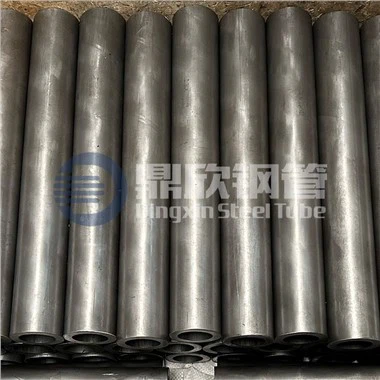
Heat treatment is a crucial process in the manufacturing industry, especially when it comes to enhancing the properties of metals. As a supplier of ST52 NBK, I have witnessed firsthand the significant impact of heat treatment on the microstructure of this material. In this blog, I will delve into the effects of heat treatment on the microstructure of ST52 NBK, exploring how it can transform the material's properties and performance.
Understanding ST52 NBK
ST52 NBK is a high - strength, low - alloy structural steel commonly used in various applications, such as automotive components, machinery parts, and construction. Its excellent combination of strength, toughness, and weldability makes it a popular choice among engineers and manufacturers. The chemical composition of ST52 NBK typically includes elements like carbon, silicon, manganese, phosphorus, sulfur, and small amounts of other alloying elements. These elements interact with each other to form the initial microstructure of the steel, which is mainly composed of ferrite and pearlite.
The Basics of Heat Treatment
Heat treatment involves heating and cooling a metal in a controlled manner to alter its physical and mechanical properties. The main types of heat treatment processes include annealing, normalizing, quenching, and tempering. Each process has a different effect on the microstructure of the steel, depending on the heating temperature, holding time, and cooling rate.
Annealing
Annealing is a heat treatment process that involves heating the steel to a specific temperature, holding it at that temperature for a certain period, and then cooling it slowly. This process is used to relieve internal stresses, improve ductility, and refine the grain structure of the steel. When ST52 NBK is annealed, the ferrite and pearlite grains grow and become more uniform, resulting in a softer and more ductile material. The slow cooling rate during annealing allows the carbon atoms to diffuse evenly, reducing the hardness and increasing the toughness of the steel.
Normalizing
Normalizing is similar to annealing, but the cooling rate is faster. The steel is heated to a temperature above the upper critical temperature and then cooled in air. This process is used to refine the grain structure, improve the mechanical properties, and eliminate any residual stresses. In the case of ST52 NBK, normalizing results in a finer grain size compared to annealing. The faster cooling rate prevents the grains from growing too large, leading to a material with higher strength and hardness. The microstructure after normalizing consists of fine - grained ferrite and pearlite, which provides a good balance between strength and toughness.
Quenching
Quenching is a rapid cooling process that involves immersing the heated steel in a quenching medium, such as water, oil, or polymer solution. This process is used to increase the hardness and strength of the steel by forming a martensitic microstructure. When ST52 NBK is quenched, the high - temperature austenite phase transforms into martensite, a very hard and brittle phase. The rapid cooling rate suppresses the formation of ferrite and pearlite, and the carbon atoms are trapped in the crystal lattice of the martensite. However, quenching also introduces high internal stresses in the material, which can lead to cracking if not properly relieved.
Tempering
Tempering is a subsequent heat treatment process that is usually performed after quenching. The quenched steel is heated to a temperature below the lower critical temperature and held for a certain time, followed by slow cooling. Tempering is used to reduce the internal stresses, improve the toughness, and relieve the brittleness of the quenched steel. During tempering, the martensite decomposes into a mixture of ferrite and carbide particles. The carbide particles act as obstacles to dislocation movement, which helps to maintain a certain level of hardness while increasing the toughness of the material.
Effects of Heat Treatment on the Microstructure of ST52 NBK
Microstructural Changes during Annealing
As mentioned earlier, annealing of ST52 NBK leads to the growth and homogenization of ferrite and pearlite grains. The slow cooling rate allows the carbon atoms to diffuse out of the supersaturated ferrite, resulting in the formation of coarser pearlite colonies. The overall effect is a decrease in hardness and an increase in ductility. The microstructure becomes more stable, and the internal stresses are relieved, making the material more suitable for machining and forming operations.
Microstructural Changes during Normalizing
Normalizing produces a finer - grained microstructure compared to annealing. The air - cooling process promotes the formation of fine - grained ferrite and pearlite. The fine grains provide more grain boundaries, which act as barriers to dislocation movement. This results in an increase in strength and hardness compared to the as - received ST52 NBK. The improved mechanical properties make the normalized steel more suitable for applications where high strength and good toughness are required, such as in the manufacturing of structural components.
Microstructural Changes during Quenching
Quenching of ST52 NBK transforms the austenite phase into martensite. The martensitic microstructure is characterized by a needle - like or lath - like morphology. The high hardness of martensite is due to the presence of a large number of dislocations and the supersaturated carbon atoms trapped in the crystal lattice. However, the martensite is very brittle, and the high internal stresses can cause the material to crack. Therefore, quenching alone is not sufficient for most applications.
Microstructural Changes during Tempering
Tempering of quenched ST52 NBK modifies the martensitic microstructure. As the steel is heated during tempering, the martensite begins to decompose. The carbon atoms start to precipitate out of the martensite, forming fine carbide particles. The ferrite matrix becomes more ductile, and the internal stresses are gradually relieved. The resulting microstructure is a combination of ferrite and carbide particles, which provides a good balance between hardness, strength, and toughness.
Applications of Heat - Treated ST52 NBK
The heat - treated ST52 NBK can be used in a wide range of applications, depending on its specific properties. For example, the annealed ST52 NBK is often used in applications where good formability is required, such as in the manufacturing of automotive body parts. The normalized ST52 NBK is suitable for structural components in construction and machinery, where high strength and toughness are needed. The quenched and tempered ST52 NBK is commonly used in high - stress applications, such as in the production of shafts, gears, and bolts.
Related Products
If you are interested in other steel products, we also offer a variety of high - quality seamless tubes. You can check out our EN 10305 - 1 E215 E235 E355 +C+SR+A+N Cold Drawn Seamless Tube, Alloy Steel Seamless Tube 20Mn2 40Mn2, and Motorcycle Front Fork Tube SAE 1536 1541. These products are also subject to strict quality control and can be customized according to your specific requirements.
Conclusion
Heat treatment plays a vital role in altering the microstructure and properties of ST52 NBK. By carefully selecting the appropriate heat treatment process, manufacturers can tailor the material to meet the specific requirements of different applications. Whether it is annealing for improved ductility, normalizing for enhanced strength and toughness, quenching for high hardness, or tempering for a balance of properties, each heat treatment process has its own unique effect on the microstructure of ST52 NBK.


If you are in need of high - quality ST52 NBK or any of our other steel products, please feel free to contact us for procurement and negotiation. We are committed to providing you with the best products and services to meet your business needs.
References
- ASM Handbook Volume 4: Heat Treating, ASM International
- Fundamentals of Steelmaking and Processing, John Wiley & Sons
- Metallurgy and Heat Treatment of Steels, CRC Press