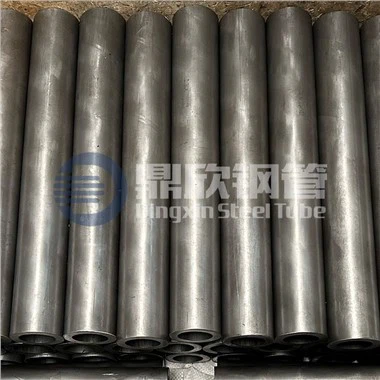
As a trusted supplier of GB/T 3077 alloy structural steels, I've witnessed firsthand the importance of understanding the hardness requirements for these materials. GB/T 3077 alloy structural steels are widely used in various industries due to their excellent mechanical properties, and hardness is a critical factor that influences their performance and suitability for specific applications. In this blog, I'll delve into the key requirements for the hardness of GB/T 3077 alloy structural steels.
Importance of Hardness in GB/T 3077 Alloy Structural Steels
Hardness is a fundamental property of metals that measures their resistance to local deformation, such as indentation, scratching, or wear. In the context of GB/T 3077 alloy structural steels, hardness plays a crucial role in determining their strength, toughness, and machinability. For instance, in applications where high wear resistance is required, such as in the manufacturing of gears, shafts, and tooling, a higher hardness is often desirable. On the other hand, for components that need to withstand impact loads, a balance between hardness and toughness is essential to prevent brittle fracture.


Factors Affecting the Hardness of GB/T 3077 Alloy Structural Steels
The hardness of GB/T 3077 alloy structural steels is influenced by several factors, including:
- Chemical Composition: The chemical composition of the steel is one of the primary factors affecting its hardness. Alloying elements such as chromium (Cr), molybdenum (Mo), nickel (Ni), and vanadium (V) can significantly increase the hardenability and hardness of the steel. For example, steels with higher chromium content tend to have better corrosion resistance and higher hardness.
- Heat Treatment: Heat treatment is a critical process for controlling the hardness of GB/T 3077 alloy structural steels. Processes such as quenching and tempering can be used to achieve the desired hardness and mechanical properties. Quenching involves rapid cooling of the steel from a high temperature to form a hard martensitic structure, while tempering is used to reduce the brittleness of the martensite and improve its toughness.
- Grain Size: The grain size of the steel also affects its hardness. Generally, a finer grain size results in higher hardness and better mechanical properties. This is because a finer grain structure provides more grain boundaries, which impede the movement of dislocations and increase the resistance to deformation.
Hardness Requirements in GB/T 3077 Standard
The GB/T 3077 standard specifies the technical requirements for alloy structural steels, including the hardness requirements. The standard classifies the steels into different grades based on their chemical composition and mechanical properties, and each grade has specific hardness requirements. For example, some grades of GB/T 3077 alloy structural steels may have a required hardness range of 179 - 229 HB (Brinell hardness), while others may have a higher hardness requirement.
It's important to note that the hardness requirements in the standard are typically specified in terms of a range rather than a single value. This is because the actual hardness of the steel can vary depending on factors such as the manufacturing process, heat treatment conditions, and the size and shape of the component.
Testing the Hardness of GB/T 3077 Alloy Structural Steels
To ensure that the GB/T 3077 alloy structural steels meet the required hardness standards, various testing methods can be used. The most common methods include:
- Brinell Hardness Test: This test involves pressing a hard ball of a specified diameter into the surface of the steel under a specific load. The diameter of the indentation left on the surface is then measured, and the Brinell hardness number (HB) is calculated based on the load and the diameter of the indentation.
- Rockwell Hardness Test: The Rockwell hardness test measures the depth of penetration of an indenter into the steel under a minor load followed by a major load. The difference in the depth of penetration between the minor and major loads is used to determine the Rockwell hardness number.
- Vickers Hardness Test: Similar to the Brinell test, the Vickers hardness test uses a square-based pyramid indenter to make an indentation on the steel surface. The diagonal length of the indentation is measured, and the Vickers hardness number (HV) is calculated.
Applications and Corresponding Hardness Requirements
GB/T 3077 alloy structural steels are used in a wide range of applications, each with its own specific hardness requirements. Here are some common applications and the associated hardness requirements:
- Automotive Industry: In the automotive industry, GB/T 3077 alloy structural steels are used for components such as axles, crankshafts, and gears. These components often require high hardness and good wear resistance to ensure long - term performance. For example, gears may require a hardness of around 58 - 62 HRC (Rockwell hardness C scale) to withstand the high contact stresses during operation.
- Machinery Manufacturing: In machinery manufacturing, the steels are used for parts such as shafts, spindles, and connecting rods. The hardness requirements for these components depend on the specific application, but generally, a hardness range of 200 - 300 HB is common to ensure good strength and machinability.
Comparison with Other Steel Standards
When considering GB/T 3077 alloy structural steels, it's also useful to compare them with other international steel standards. For example, ASTM A519 SAE AISI 1010 1020 1026 1045 1541 4130 4140 Mechanical Tubing and DIN 1630 ST37.4 ST52.4 NBK Seamless Tube are well - known standards in the Western market. While there are some similarities in terms of the general properties of the steels, there may be differences in the specific chemical compositions, mechanical properties, and hardness requirements.
GB/T 3077 alloy structural steels offer unique advantages in terms of their chemical composition and heat treatment capabilities, which can be tailored to meet specific application requirements. For example, our Alloy Seamless Tube 20CrMo 30CrMo 35CrMo 42CrMo For Automotive Parts is designed to provide excellent hardness and mechanical properties for automotive applications.
Conclusion
Understanding the requirements for the hardness of GB/T 3077 alloy structural steels is crucial for ensuring their proper use in various applications. As a supplier, we are committed to providing high - quality GB/T 3077 alloy structural steels that meet or exceed the specified hardness standards. Whether you need steels for automotive, machinery, or other industries, we can offer customized solutions based on your specific hardness and performance requirements.
If you're interested in purchasing GB/T 3077 alloy structural steels or have any questions about their hardness requirements, please feel free to contact us for a detailed discussion and procurement negotiation. We look forward to working with you to meet your steel needs.
References
- GB/T 3077 - 2015, Alloy structural steels.
- ASM Handbook, Volume 1: Properties and Selection: Irons, Steels, and High - Performance Alloys.
- Callister, W. D., & Rethwisch, D. G. (2017). Materials Science and Engineering: An Introduction.